
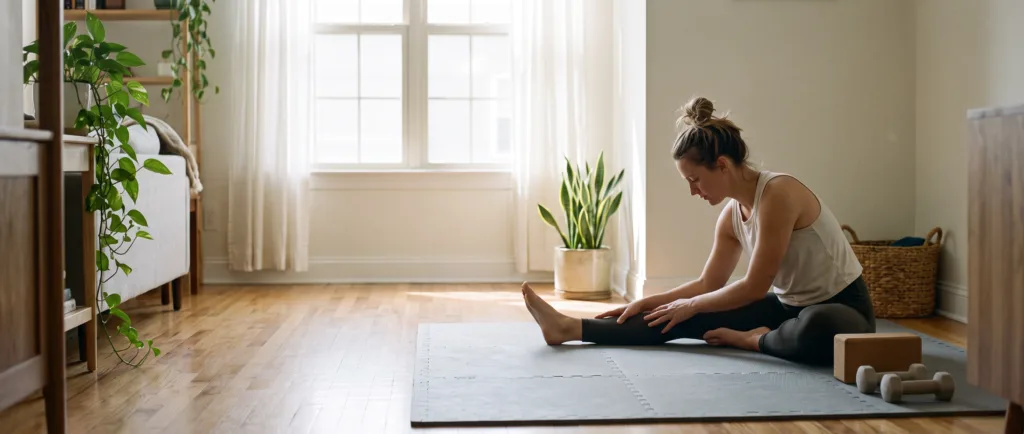
Cushioned Floors for Home Workouts
Home gym foam mat tiles that cushion floor work, soften impact noise and expand to fit any corner of an apartment, in plain, solid and wood-grain designs that look at home in a living room.
What a home gym foam mat does better than bare floors
More people train at home, often in shared rooms and upstairs apartments. A foam floor solves three problems at once.
Cushioning
1/2-inch EVA cushions knees, elbows and backs during stretching, core work and bodyweight training.
Quieter floors
Closed-cell foam absorbs impact, which helps soften the thud of jumps and dropped light weights for people downstairs.
Expandable
Interlocking tiles start as a stretching corner and grow into a full workout zone. Lift them up and stack them when the room is needed.
Wipe-clean
The laminated surface is waterproof, so sweat and spilled water wipe off without soaking in.
Home gym foam mat specs
Our standard tiles suit stretching, floor exercise and light equipment. For heavy free weights or machines, tell us the use case and we will advise on the right construction before you commit.
| Material | Standard EVA, Bio EVA or GraphEVA antibacterial EVA |
|---|---|
| Standard thickness | 1/2 inch (about 1.2 cm) |
| Tile size | About 62 × 62 cm (24 × 24 in); 45 × 45 cm on selected designs |
| Standard set | 6 tiles plus edging borders |
| Finishes | Solid and plain colors, canvas texture, wood grain |
| Safety | Formamide under 2 ppm; tested to CPSIA, ASTM F963, CA Prop 65, EN 71 and REACH |
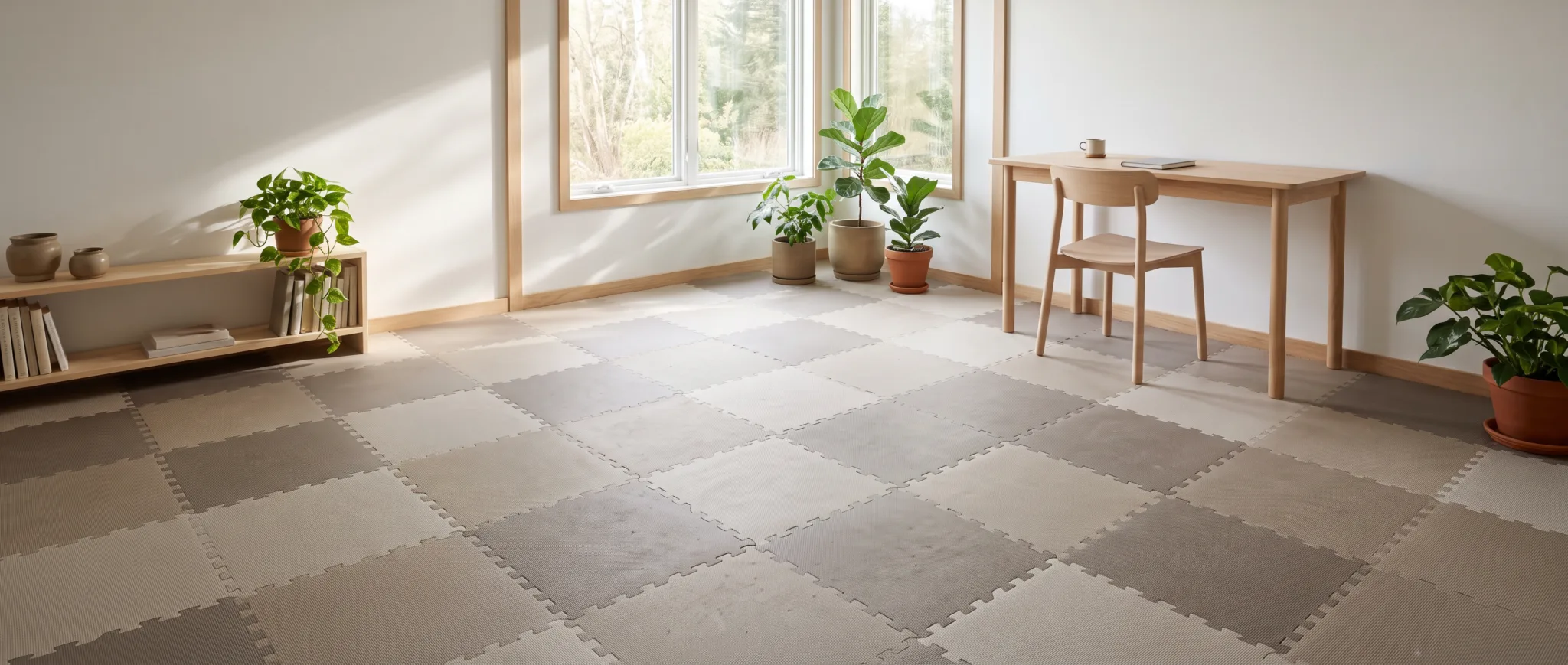
Plain, solid and wood-grain tiles
Calm finishes keep the workout corner from dominating the room. Each design is ready for private label.

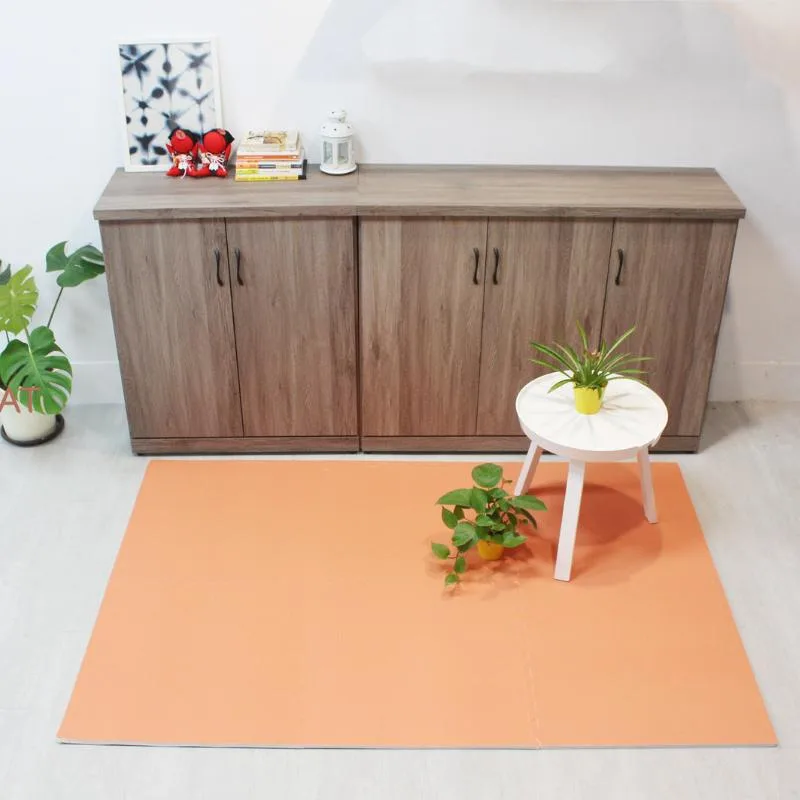
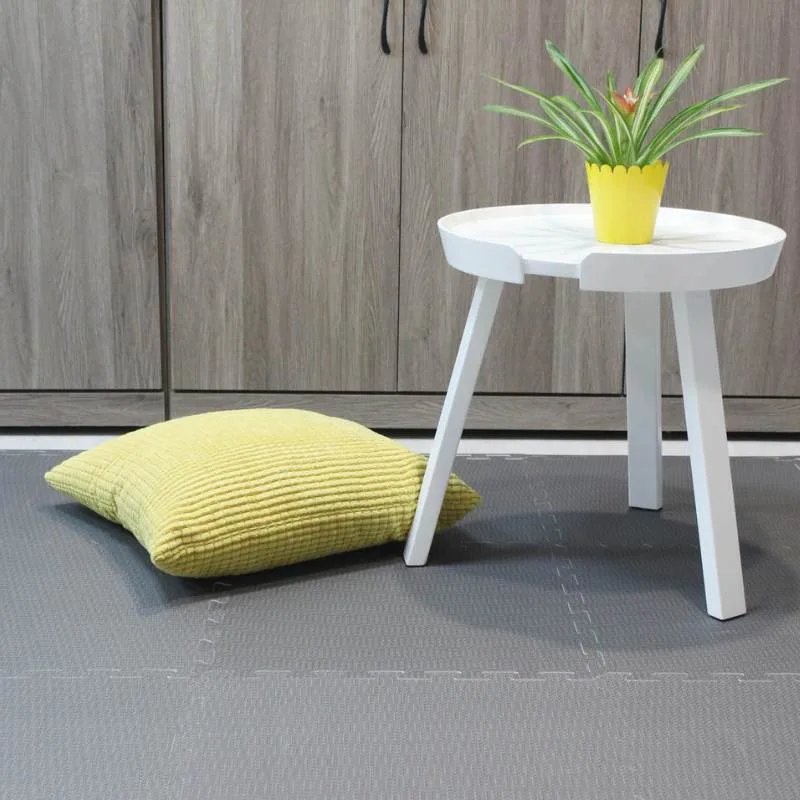
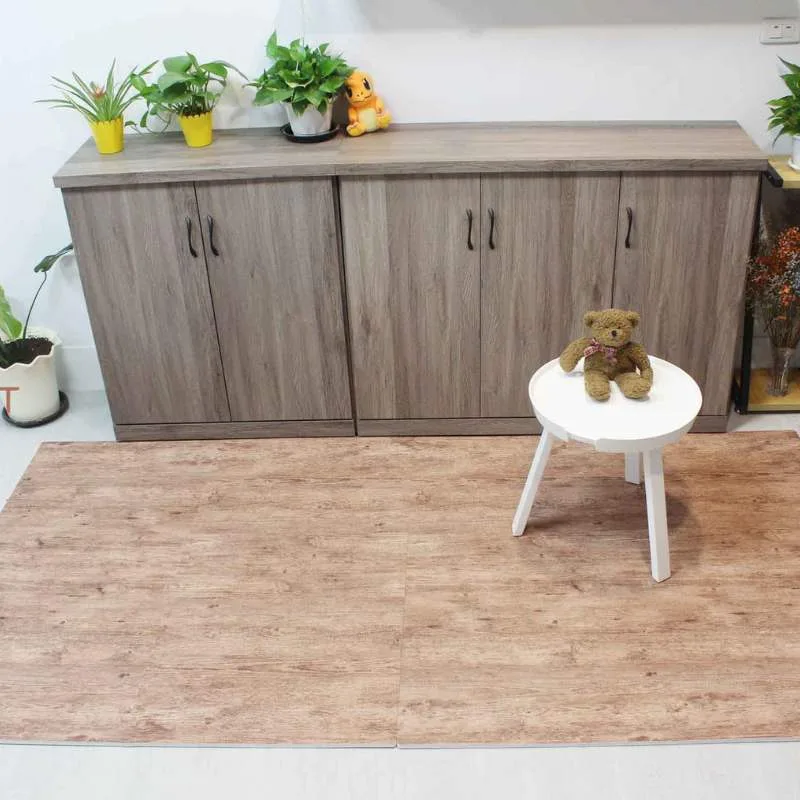
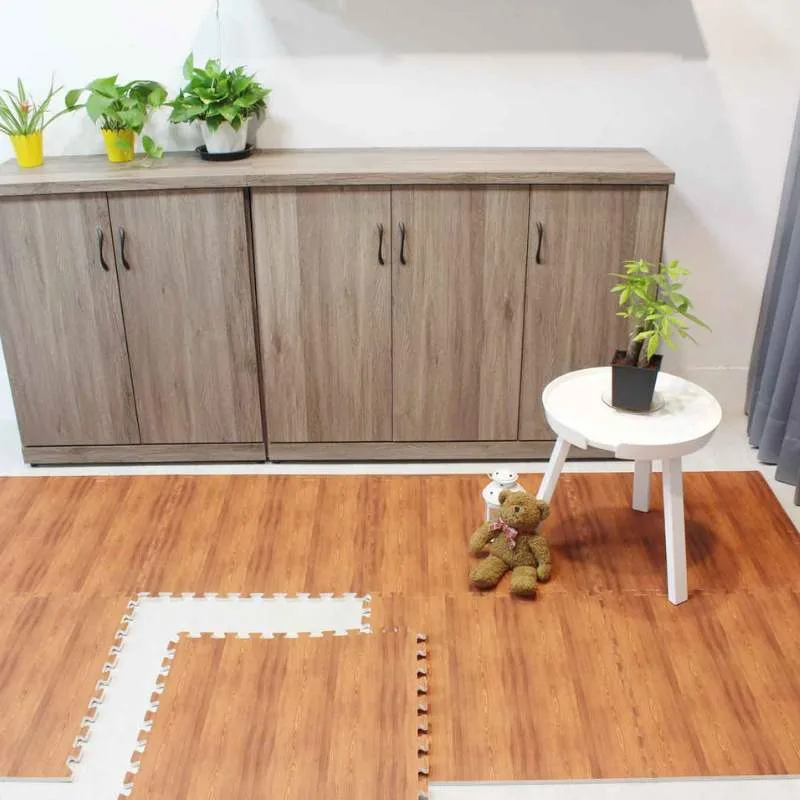

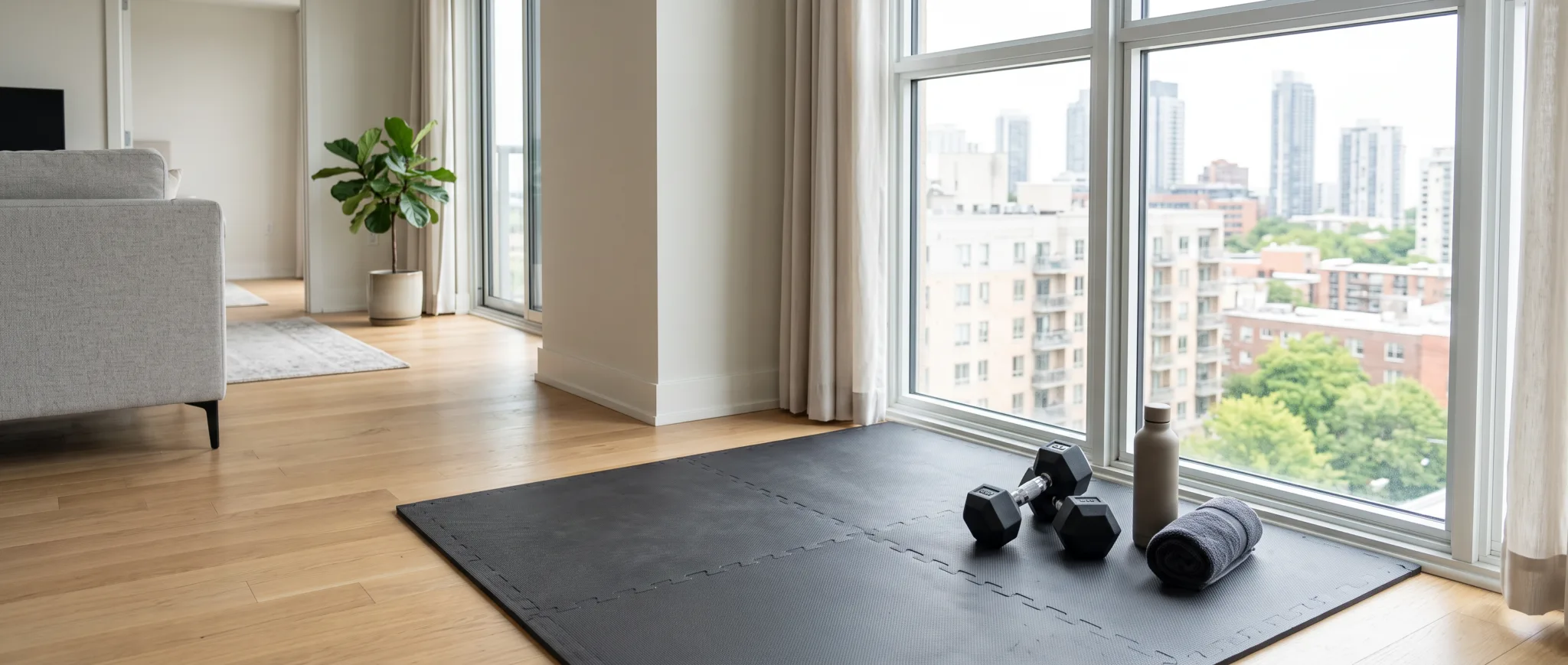
Quieter floors for every workout.
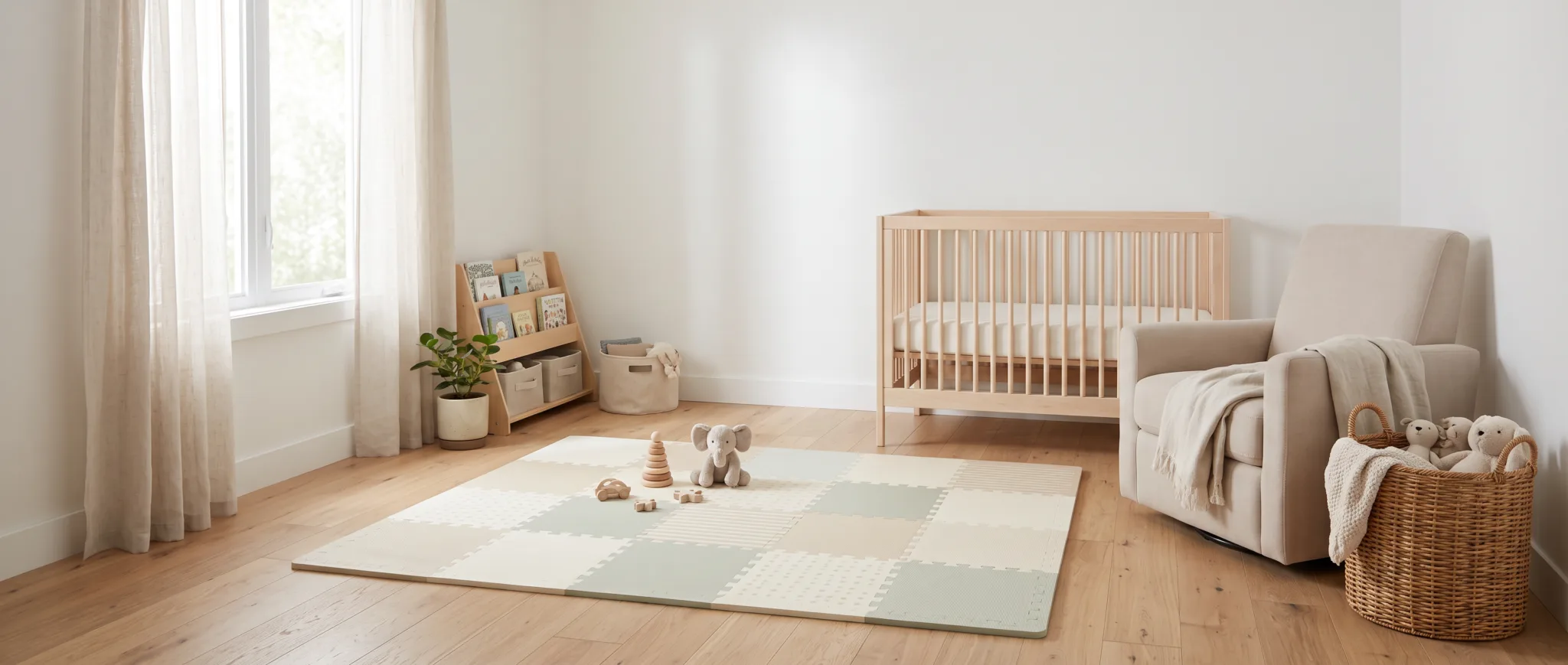
Build a home workout floor for your brand
Solid colors
Solid colors matched to your brand palette.
Prints
Wood-grain or texture prints from our library.
Material
Standard EVA, Bio EVA or GraphEVA antibacterial foam.
Pack size
Tile count per pack for different room sizes.
Packaging
Retail packaging and labeling with your logo.
Testing scope
Testing matched to your target markets.
Questions about home gym floor tiles
What thickness of foam tiles is best for a home gym floor?
For most home workouts, 1/2 inch (about 1.2 cm) EVA is the sweet spot. It cushions knees, elbows and backs during stretching, core work and bodyweight training, yet stays firm and flat enough for stable footing. Komat’s home fitness tiles use 1/2 inch as standard, and we review your use case if your line needs to handle more than floor exercise and light equipment.
Do interlocking foam tiles protect floors during workouts?
Yes. A layer of interlocking EVA tiles sits between hardwood or tile and the knocks of daily training, so dropped light weights and equipment feet land on foam instead of the floor. The laminated surface is waterproof, which means sweat and spilled water wipe off without soaking through. Tiles lift up and stack away when the room is needed for something else.
Are EVA foam tiles firm enough for weights and gym equipment?
Komat’s standard EVA tiles suit stretching, floor exercise and light equipment such as light dumbbells. Heavy free weights and machines put far more load on a small area, so foam density and construction need to match that use. Tell us the equipment your customers will use and we will advise on the right construction before you commit to a spec.
How many foam tiles do I need for a home workout area?
Measure the space and divide by the tile size. Komat’s standard tile is about 24 × 24 in (62 × 62 cm), with 45 × 45 cm on selected designs, and a standard set of 6 tiles plus edging borders makes a compact stretching corner. Because the tiles interlock, buyers can add packs until they have a full workout zone, so offering several pack sizes covers different room sizes.
Which tile finish works best for a home gym in a shared room?
Calm finishes keep a workout corner from dominating a living room or bedroom. Komat’s home fitness designs include Modern Minimalist Plain and Elegant Plain solids, a Canvas Texture that helps hide scuffs, and Western Hemlock, Pitch Pine and Mahogany wood grains that blend with real floors. Solid colors can also be matched to your brand palette, and each design is ready for private label.
No matching questions.
Plan your home fitness floor line
Tell us the use case, finishes and pack sizes you have in mind. We will recommend specs and send a quote.