
-

EVA vs PVC vs PU Play Mats: Materials Compared
EVA vs PVC vs PU leather play mats compared on softness, cleaning, plasticizers, durability and labeling, so brands can match each material to the room and routine it suits best.
-

Closed-Cell Foam: Why It Matters for Floor Mats
Closed cell foam seals every gas bubble off from its neighbors, so spills stay on the surface. See how closed vs open cell foam compare on water uptake, compression set and cleaning, and why EVA play mats use closed cells.
-
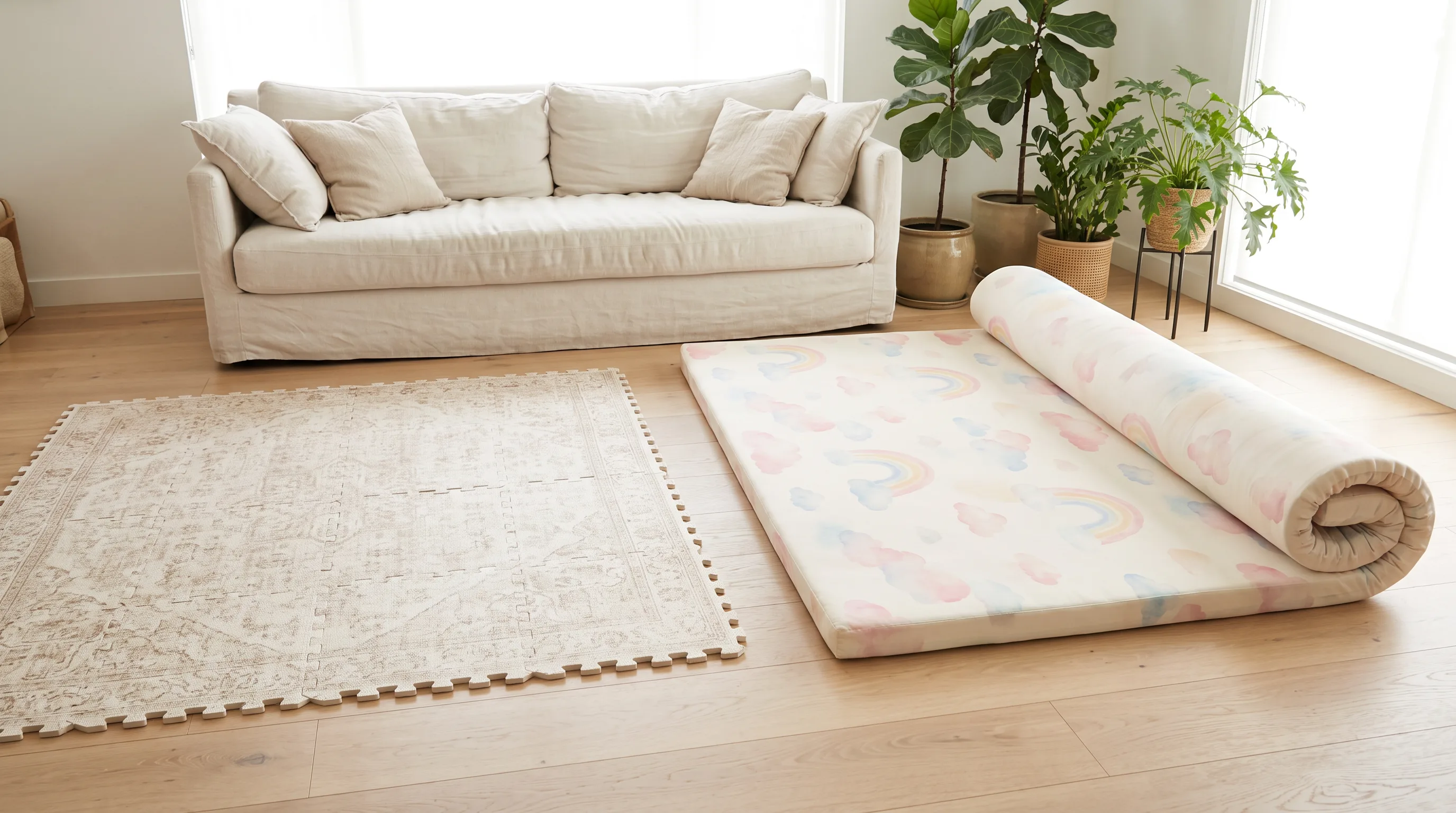
EVA vs Polyethylene (PE, XPE, IXPE) Foam: Which Is Better for Play Mats?
Polyethylene foam (PE, XPE, IXPE) and EVA foam are both closed-cell, but they suit different play mat formats. Compare softness, resilience, printability and compliance to choose the right material.
-
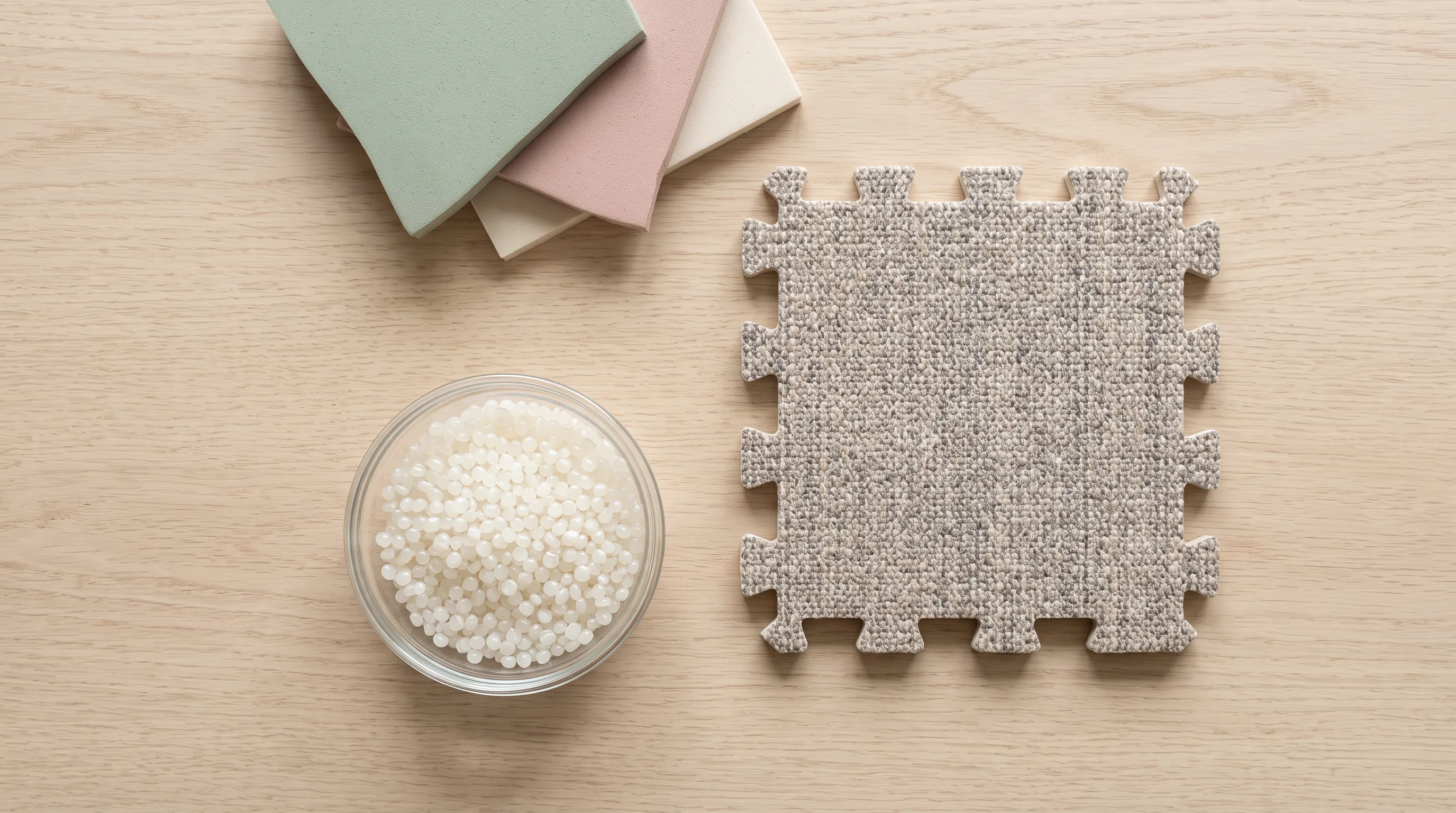
What Is EVA Material? Properties, Safety and Uses
EVA material (ethylene vinyl acetate) is a copolymer whose vinyl acetate content sets its softness and flexibility. Learn its key properties, everyday uses and why EVA foam is the standard for interlocking play mats.
-

Is EVA Foam Toxic? Is It Safe for Babies?
Is EVA foam toxic? The polymer itself is low-toxicity; the real questions are residues like formamide, lead in pigments and phthalates in surface layers. Here is how to read test reports and what brands should test before launch.