
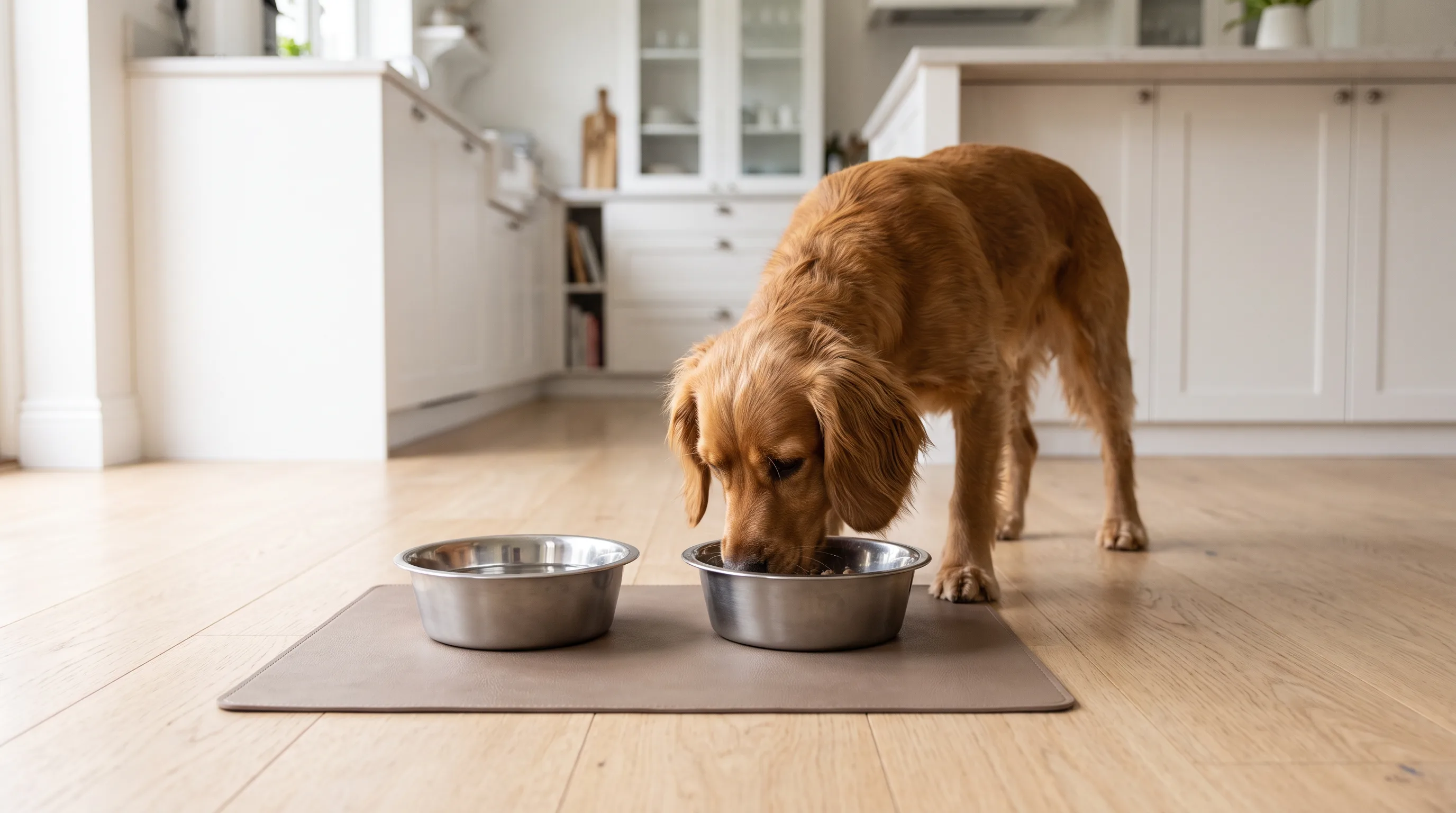
A dog bowl mat is a waterproof or wipe-clean pad that sits under food and water bowls to catch spills, kibble and drool and protect the floor. The best pet feeding mat for most homes is one that is sized a hand’s width beyond your bowls on every side, has a raised or sealed edge for water, grips the floor and can be wiped or washed daily without fuss.
Key Takeaways
- Size the mat to the bowl setup plus margin; most messes land just outside the bowl, not under it.
- Silicone and rubber mats contain water best; vegan leather mats look most like décor and wipe clean fast; fabric mats absorb but need frequent laundering.
- The FDA advises washing and drying pet food bowls after each use and washing water bowls daily.
- CDC guidance names feeding mats and placemats among the pet items to clean frequently.
- No pet mat is indestructible: claws, chewing and heavy bowls cause wear over time, so choose a material and pattern that suit your pet.
What Is a Dog Bowl Mat?
A dog bowl mat, also called a pet food mat, dog food mat, pet feeding mat or pet placemat, is a flat protective layer placed under a pet’s food and water bowls. Its job is to catch what misses the bowl: splashed water, scattered kibble, wet food smears and drool. A good one also stops bowls from sliding and keeps moisture off wood, laminate or grout, where standing water can stain or warp the floor over time.
The category looks simple, but the differences between mats are real. Material decides how well water is contained and how easy cleanup is. Size decides whether the mat actually catches the mess. Edge design decides whether a water bowl overflow stays on the mat or runs onto the floor. And style decides whether the mat looks like part of the kitchen or like a utility item you would rather hide.
Dog Bowl Mat Materials Compared
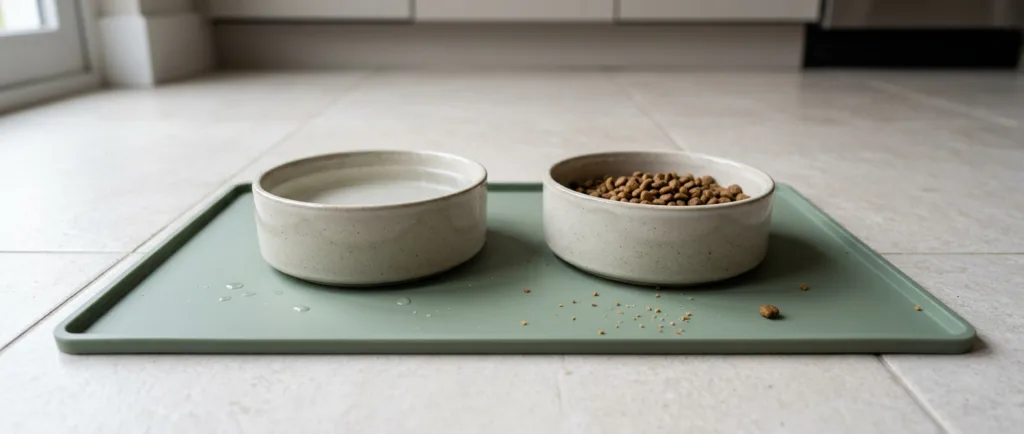
Most pet feeding mats are made from one of five material groups. Each has trade-offs, and the right one depends on how messy your pet is, what floor you have and how the mat needs to look.
Silicone
Silicone is a flexible, rubber-like synthetic material that grips smooth floors and can be molded with a raised lip. That lip is the main reason silicone is popular for water bowls: it holds small spills in place until you wipe them. Silicone is usually dishwasher-safe if labeled, but it can attract pet hair and dust, and thick silicone mats can be bulky to store.
Rubber
Rubber mats are heavy, grippy and durable, well suited to large dogs, mudrooms and laundry rooms. They are practical rather than decorative, and some have a noticeable smell when new. Textured rubber surfaces hold crumbs, so they need scrubbing rather than a simple wipe.
Vegan Leather
Vegan leather is a leather-look material made without animal hide, typically a coated synthetic sheet. Thin vegan leather mats lie flat, look like a premium placemat or small rug and wipe clean with a damp cloth. They suit open-plan kitchens and dining areas where the feeding station is on display. Most are flat rather than lipped, so they contain drips and crumbs well but are not designed to hold a full tipped water bowl; for heavy drinkers, size the mat generously.
Fabric and Absorbent Mats
Fabric mats with a waterproof backing absorb drips instead of pooling them, which is helpful for dogs that drip water as they walk away. The downside is hygiene: an absorbent top holds moisture and food residue and needs frequent machine washing to stay fresh.
Hard Plastic Trays
Rigid trays with deep walls contain the most water but slide more easily, crack over time and are the least decorative option. They make sense for very messy drinkers or for elevated feeders where splashes fall from height.
| Material | Water containment | Cleaning | Grip on floor | Look | Best for |
|---|---|---|---|---|---|
| Silicone | Very good with raised lip | Wipe or dishwasher if labeled; attracts hair | Very good | Casual | Messy drinkers, small to medium dogs, cats |
| Rubber | Good | Scrub; textured surfaces hold crumbs | Excellent | Utility | Large dogs, mudrooms |
| Vegan leather | Good for drips; flat edges | Wipe with damp cloth in seconds | Good (depends on backing) | Premium, décor-friendly | Kitchens and living areas on display |
| Fabric with waterproof back | Absorbs drips | Machine wash often | Good | Soft, rug-like | Dogs that drip as they walk away |
| Hard plastic tray | Excellent with deep walls | Rinse and wipe | Fair; can slide | Basic | Very messy drinkers, elevated feeders |
How Do You Choose the Right Size Pet Feeding Mat?
Size is where most dog food mats fail. A mat that only fits the bowls catches almost nothing, because the mess happens around the bowls: kibble pushed over the rim, water flung by a dog shaking its head, drips from a beard or jowls.
A practical approach:
- Measure your bowl footprint. Place the bowls side by side with a little space between them and measure the total width and depth.
- Add margin. Allow roughly a hand’s width beyond the bowls on every side, more at the front where your pet stands.
- Factor in your pet. Large or enthusiastic eaters, dogs with long ears or beards and dogs that drink fast need more margin than a tidy cat.
- Check the space. Make sure the mat lies flat without curling up against a wall, cabinet kick or door swing.
- Consider an elevated feeder. If you use a raised stand, the mat should extend beyond the stand’s legs, since splashes fall from higher and spread farther.
| Bowl setup | What to look for in the mat | Edge type |
|---|---|---|
| Single small bowl (cat or small dog) | Placemat-sized; easy to lift to the sink | Flat or low lip |
| Two bowls, small to medium dog | Wide rectangle with margin on all sides | Low lip or sealed flat edge |
| Two large bowls, large dog | Extra depth at the front where the dog stands | Raised lip or heavier material |
| Elevated feeder stand | Extends well beyond the stand’s legs | Raised lip helpful |
| Multi-pet feeding station | Long runner shape or two mats side by side | Match edges so they lie flat |
Waterproof Edges: Why They Matter
A waterproof edge is the outer rim of the mat that stops liquid from running off onto the floor. Mats handle this in three ways: a raised lip (common on silicone and trays), a sealed or bound flat edge that prevents water from wicking underneath (common on vegan leather and coated mats), and a waterproof backing under an absorbent top (fabric mats). For wood or laminate floors, the backing matters as much as the top. Water that seeps under a mat and sits there can damage the floor finish over time, so lift the mat regularly and dry underneath.
How to Clean a Dog Food Mat
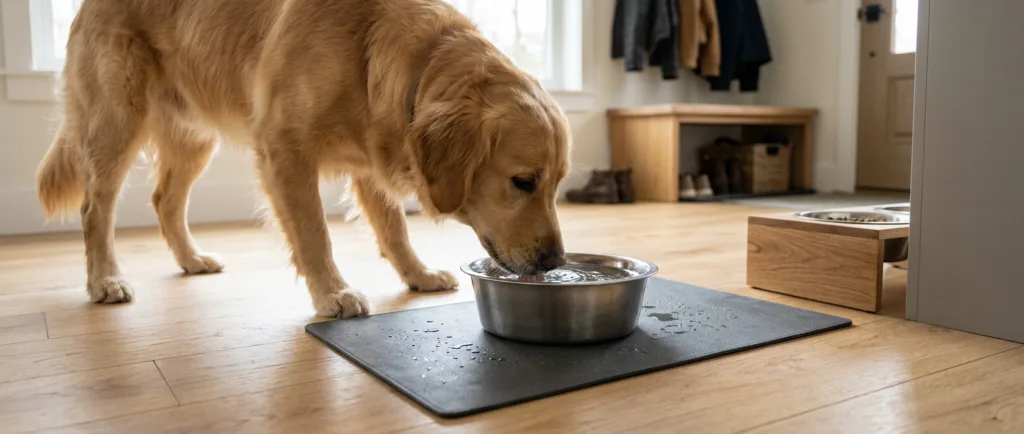
A feeding mat collects food residue and saliva every day, so it should be part of the same cleaning routine as the bowls. The U.S. Food and Drug Administration advises washing and drying pet food bowls after each use, washing water bowls daily, and washing scoops and measuring utensils after each use. The CDC lists feeding mats and placemats alongside bowls and scoops as items to clean frequently, and advises washing your hands with soap and water before and after handling pet food or treats.
For pet supplies washed by hand, CDC guidance is to wash with soap or detergent and warm water, scrub with a sponge or brush, rinse, and air dry or wipe with a clean towel. CDC notes that using the kitchen sink may spread germs to your food; if it is your only option, clean and disinfect the sink and surrounding area right after. A simple routine by material:
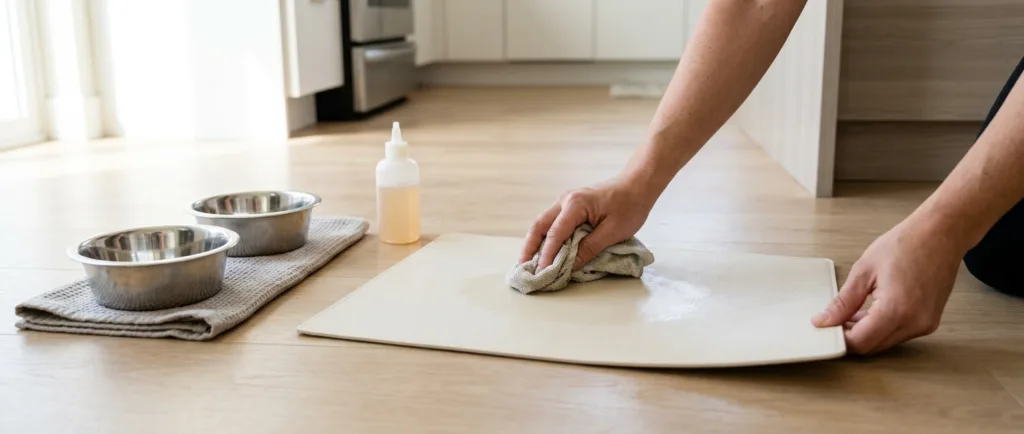
- Vegan leather: wipe with a damp cloth and a drop of mild dish soap after meals, then dry. Avoid soaking or harsh solvents.
- Silicone: rinse and wipe daily; wash in the dishwasher if the label allows.
- Rubber: scrub textured surfaces with soapy water and a brush, rinse and dry.
- Fabric: shake out crumbs daily and machine wash per the care label, often several times a week for messy eaters.
- Underneath: lift the mat and dry the floor so moisture does not sit trapped.
Style: A Feeding Station That Fits the Room
For many households, the feeding station sits in the kitchen or a dining nook, so the mat is on view every day. Neutral tones such as taupe, charcoal, cream and olive hide crumbs and blend with wood and stone floors. Subtle textures and patterns hide water spots between wipes. Shape matters too: a rectangle reads as a placemat, a rounded or scalloped edge feels softer, and a long runner works for multi-pet homes.
It is also worth being realistic about wear. Claws, chewing, heavy ceramic bowls dragged across the surface and puppies who treat the mat as a toy will all mark any mat eventually. Mid-tone colors and light textures disguise everyday wear better than very light, glossy finishes, and a mat that is easy to replace is part of a sensible feeding setup.
How Komat Approaches Pet Feeding Mats
At Komat, our pet mats use the same thin, wipe-clean biodegradable PVC vegan leather material we developed for our leather splat mats under high chairs, where daily food spills are the whole point. The material lies flat, wipes clean quickly and can be printed or colored to suit a brand’s palette. You can see the range on our pet mats page and how they fit into home settings on our pet living page. If you are comparing materials for mealtime mats in general, our splat mat buyer’s guide covers the same cleaning and sizing logic for babies.
Frequently Asked Questions
What is the best material for a dog bowl mat?
It depends on your pet and your floor. Silicone with a raised lip contains water best for messy drinkers. Vegan leather looks most like décor and wipes clean fastest, making it a good fit for kitchens on display. Rubber suits large dogs and mudrooms. Fabric mats absorb drips but need frequent washing to stay hygienic.
How big should a pet food mat be?
Measure your bowls side by side, then add roughly a hand’s width of margin on every side, with extra depth at the front where your pet stands. Large dogs, fast drinkers and pets with long ears or beards need more margin. If you use an elevated feeder, choose a mat that extends well beyond the stand’s legs.
How often should I clean a dog feeding mat?
Clean it as often as the bowls. The FDA advises washing food bowls after each use and water bowls daily, and the CDC lists feeding mats among pet items to clean frequently. In practice, wipe the mat after meals, wash it thoroughly at least daily for wet food, and lift it to dry the floor underneath.
Are vegan leather pet mats waterproof?
Vegan leather mats have a coated, non-absorbent surface, so water and food sit on top and can be wiped away. Most are flat rather than lipped, so they handle drips and splashes well but will not hold a fully tipped water bowl. For heavy drinkers, choose a larger size and lift the mat to dry underneath.
Will a dog bowl mat stop bowls from sliding?
Most do. Silicone and rubber mats grip both the floor and the bowl, and many vegan leather mats have a grippy backing. Heavier bowls with non-slip bases help further. If a mat slides on a very smooth floor, check that both the floor and the mat’s underside are clean and dry.
If you are a pet brand or retailer building a feeding mat line, explore Komat’s printable vegan leather options on our designs page or contact our team to talk through materials and private-label programs.