

FOB vs EXW is about where the seller’s job ends. Under EXW (Ex Works), the seller makes goods available at its premises and the buyer handles loading, export clearance and transport. Under FOB (Free on Board), the seller clears the goods for export and loads them on board the vessel at the named port, where risk passes to the buyer. For first-time importers, FOB or FCA is usually simpler.
Key Takeaways
- Incoterms 2020 are the International Chamber of Commerce’s 11 rules that define which party handles delivery, costs, risk, export and import clearance in a sale.
- EXW places the minimum obligation on the seller: the buyer loads the goods, clears them for export and bears risk from the moment they are made available.
- FOB is a sea and inland waterway rule: the seller delivers the goods on board the vessel at the named port of shipment, and risk transfers at that point.
- ICC guidance says FOB should not normally be used for container shipments handed to the carrier at a terminal; FCA is the recommended alternative.
- Incoterms do not settle the sale amount, payment terms, or when ownership of the goods passes; those belong in the rest of your sales contract.
What Are Incoterms 2020?
Incoterms are standardized trade terms published by the International Chamber of Commerce (ICC) that define the responsibilities of sellers and buyers for delivering goods under a sales contract. The US International Trade Administration describes them as rules that clarify who handles shipping, insurance, documents and customs clearance, and recommends that sales contracts reference the Incoterms 2020 rules, which remain the edition it points to as of 2026. Parties can still use an older edition if they agree and state it clearly.
The 2020 edition has 11 rules in two groups. Seven can be used for any mode of transport: EXW, FCA, CPT, CIP, DAP, DPU and DDP. Four are for sea and inland waterway transport only: FAS, FOB, CFR and CIF. Every Incoterm should be followed by a named place, and ideally a precise point, such as “FOB Taichung, Incoterms 2020” or “FCA [named container terminal], Incoterms 2020.”
It is just as important to know what Incoterms do not do. According to the ITA, they do not determine when title passes from seller to buyer, do not identify the goods or what they cost, do not set payment terms, and do not address remedies for late delivery or non-conforming goods. Those points belong in the rest of your contract.
What Does EXW Mean?
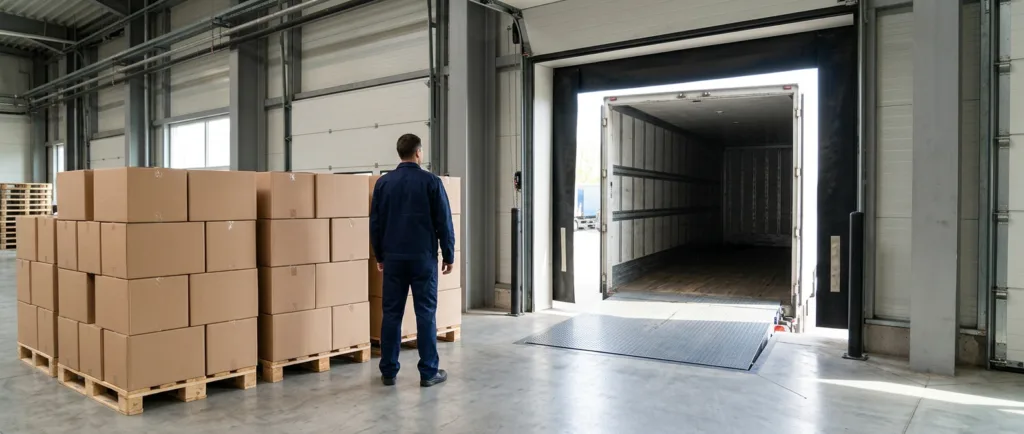
EXW, or Ex Works, means the seller delivers the goods by placing them at the buyer’s disposal at the seller’s premises or another named place. ICC’s explanatory notes say the seller does not need to load the goods onto the collecting vehicle or clear them for export. ICC’s training material describes EXW as placing “the minimum obligation on the seller in terms of risks and costs,” with loading done “at the buyer’s expense and risk,” and the buyer responsible for export formalities.
That last point is where EXW causes the most trouble. The buyer, often thousands of miles away, must arrange export clearance in the seller’s country, which may require a local agent and documents only the seller can easily provide. For this reason ICC states that traders “are strongly encouraged to consider using FCA instead of EXW where the goods are crossing a border.” EXW can still make sense for domestic sales, or when a buyer has a trusted forwarder at origin that handles everything, but for a first import it adds risk and coordination with little benefit.
What Does FOB Mean?
FOB, or Free on Board, means the seller delivers the goods on board the vessel nominated by the buyer at the named port of shipment. ICC’s notes state that “the risk of loss of or damage to the goods transfers when the goods are on board the vessel,” and costs shift to the buyer at that point. The seller clears the goods for export and pays for getting them to the port and on board; the buyer pays the ocean freight, insurance and everything at destination.
FOB shipping is widely understood, which is one reason it is so common in quotations. However, ICC notes that FOB “is not appropriate where goods are handed over to the carrier before they are on board the vessel,” which is exactly what happens with most container shipments: the container is delivered to a terminal and loaded later by the carrier. In that case the seller still bears risk for goods it no longer controls. ICC’s guidance is that FOB “should not normally be used for container shipments” and that FCA should be used instead.
FOB vs EXW and Other Incoterms Compared
The table compares the five terms first-time importers meet most often. “Delivery” is the point where the seller has fulfilled its delivery obligation and, in each of these rules, where risk passes to the buyer.
| Rule | Mode | Delivery and risk transfer | Export clearance | Main freight | Insurance | Import clearance and duty |
|---|---|---|---|---|---|---|
| EXW | Any | Goods made available at seller’s premises, not loaded | Buyer | Buyer | Buyer (optional) | Buyer |
| FCA | Any | Goods handed to buyer’s carrier at the named place | Seller | Buyer | Buyer (optional) | Buyer |
| FOB | Sea/inland waterway | Goods on board the vessel at the named port of shipment | Seller | Buyer | Buyer (optional) | Buyer |
| CIF | Sea/inland waterway | Goods on board the vessel at the port of shipment; seller pays freight to named destination port | Seller | Seller | Seller, minimum cover (Institute Cargo Clauses C) | Buyer |
| DDP | Any | Goods at buyer’s named destination, ready for unloading | Seller | Seller | Seller’s own risk (not a contract obligation) | Seller |
CIF vs FOB: Who Should Control the Freight?
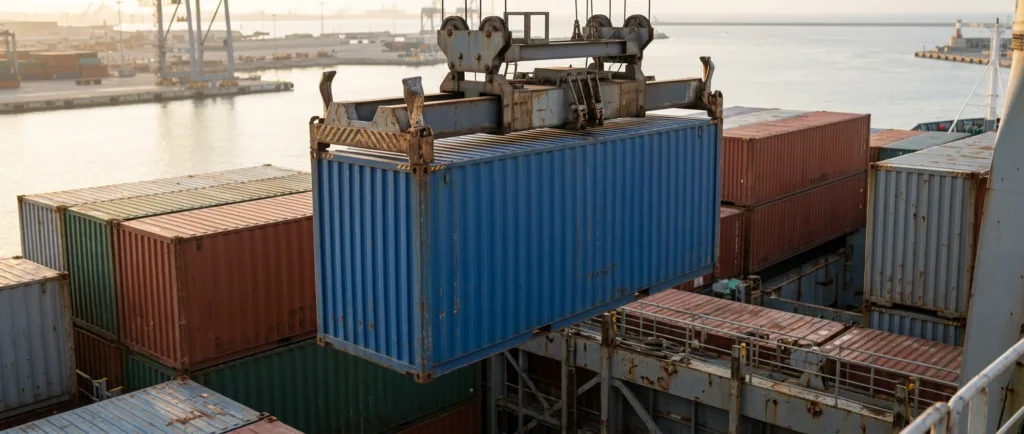
CIF (Cost, Insurance and Freight) is FOB plus two extras: the seller contracts and pays for ocean freight to the named destination port and buys insurance. Risk still passes when goods are on board at the port of shipment, so a CIF buyer bears the transit risk even though the seller paid for the freight. ICC’s notes say the seller’s insurance obligation under CIF is “limited insurance cover complying with Institute Cargo Clauses (C) or similar,” at a minimum of the contract value plus 10 percent. Clauses (C) is a basic level of cover, so many buyers arrange broader insurance themselves. By contrast, the 2020 edition raised the requirement under CIP to cover complying with Institute Cargo Clauses (A).
The practical question in CIF vs FOB is who you want controlling the booking. Under FOB, your forwarder books the freight, so you see the rates, choose the carrier and have direct visibility. Under CIF, the seller books, which is convenient but means destination charges and transit times are less transparent to you. Many experienced importers prefer to control freight once they have a forwarder they trust.
What About FCA and DDP?
FCA: the container-friendly alternative
FCA (Free Carrier) works for any transport mode. The seller clears the goods for export and hands them to the buyer’s carrier at a named place, such as the seller’s premises (loaded onto the truck) or a container terminal. ICC’s notes state that whichever place is chosen “identifies where risk transfers to the buyer.” The 2020 edition also lets the parties agree that the buyer will instruct its carrier to issue an on-board bill of lading to the seller, which helps when payment is by letter of credit. For full-container shipments, FCA aligns risk with the point where the seller actually hands over control.
DDP: the seller does everything, including your import
Under DDP (Delivered Duty Paid), ICC’s notes say the seller must clear the goods for export and for import and pay any import duty. That sounds convenient, but it means a foreign seller acts in your customs process. Because US importers of children’s products carry certification and other compliance duties, and import valuation and classification have legal consequences, most brands prefer to remain importer of record and use FCA, FOB or CIF. If you consider DDP, discuss with your customs broker who will be importer of record and how duties, fees and certificates will be handled.
Which Incoterm Is Typical for Foam Mats Shipped From Taiwan?
Play mats travel well by sea: they are light, durable and packed in cartons that stack into full containers. For sea freight from Taiwan, FOB at a named Taiwan port (for example, Taichung or Kaohsiung) is a familiar starting point in quotations, and some buyers ask for FCA at a named place instead, in line with ICC’s guidance for containers. Either way, the buyer usually books ocean freight with its own forwarder, buys cargo insurance, and acts as US importer of record.
A few points are worth agreeing in writing whatever term you choose:
- The exact named place. “FOB Taiwan” is not enough; name the port, and for FCA the specific terminal or premises.
- Loading and packing. Agree carton specifications, palletization (if any) and container loading plan. Our packaging and logistics team plans cartons around container loading.
- Documents. Commercial invoice, packing list, bill of lading arrangements and any test reports or certificate data you need for US entry.
- Inspection timing. Final inspection should happen before delivery under the chosen term, because after that point problems become your risk.
Whichever term you choose, compare offers on total delivered cost. Our guide to landed cost shows how to put EXW, FOB and CIF quotations on the same basis, and our article on HTS codes for foam play mats covers the classification side of import costs.
Importing foam play mats from Taiwan?
Packed, labeled and loaded for your market
We pack retail-ready cartons, label for your sales channel and load full containers, with 25–30 containers of monthly capacity. Tell us your destination and preferred shipping terms, and we will prepare a quote.
Practical Advice for First-Time Importers
- Write the full term. State the rule, the named place and the edition: “FCA [named place], Incoterms 2020.”
- Prefer FCA or FOB to EXW for cross-border purchases. Letting the seller clear goods for export avoids paperwork you are not well placed to handle.
- Use FCA for containers when you can. It matches ICC guidance and puts risk transfer where control actually changes hands.
- Buy appropriate insurance. Under FOB and FCA, insurance is your decision; under CIF, check whether minimum cover is enough.
- Talk to a forwarder and a customs broker early. The ITA itself recommends consulting legal counsel and licensed freight forwarders; they can confirm what each term means for your specific lane.
- Remember what Incoterms leave out. Payment terms, title transfer and quality remedies need their own clauses. Our guide on how to find a manufacturer covers the wider supply agreement.
Quick guide: matching the term to your situation
| Your situation | Term to consider | Why |
|---|---|---|
| First import, full container, your own forwarder | FCA (or FOB if the contract requires it) | Seller handles export clearance; risk passes at handover |
| You want the seller to arrange ocean freight | CIF (sea) or CIP (any mode) | Seller books and pays freight and insurance; check the insurance level |
| Your forwarder has a strong team at origin and wants full control | EXW, used with care | Lowest seller obligation, but you take on export formalities |
| Consolidated (LCL) shipment through a freight station | FCA at the named station | Matches risk to the point where cargo is handed over |
| You want delivered goods with no import role | DDP, after advice from your broker | Seller acts in import clearance; compliance roles must be clear |
This article explains common practice and is not legal advice. Confirm your contract terms with your forwarder, broker or counsel.
For importers and distributors
Build a play mat range without starting from scratch
Ready private label designs, shared test reports and consistent reorders help you grow a range your retailers can count on.
Frequently Asked Questions
What is the main difference between FOB and EXW?
Under EXW, the seller only makes the goods available at its premises; the buyer loads them, clears them for export and bears all risk and cost from there. Under FOB, the seller clears the goods for export and loads them on board the vessel at the named port, and risk passes once they are on board. FOB asks more of the seller and less of the buyer.
Is FOB or EXW better for importing?
For most cross-border purchases, FOB or FCA is the better choice because the seller handles export clearance in its own country. ICC encourages traders to consider FCA instead of EXW when goods cross a border. EXW can work when your forwarder has a strong origin team, but it adds coordination and risk for first-time importers.
Should I use FOB for container shipments?
ICC guidance says FOB should not normally be used for container shipments, because containers are usually handed to the carrier at a terminal before they are loaded on the vessel. FCA, with delivery at the named terminal or seller’s premises, matches risk to the point of handover. Many contracts still use FOB in practice, so confirm the arrangement with your forwarder.
Who pays import duty under FOB and CIF?
The buyer. Under both FOB and CIF, the buyer is responsible for import clearance, duties and destination charges. Only under DDP does the seller take on import clearance and duty. In the US, the importer of record also carries legal responsibilities for valuation, classification and, for children’s products, certification, which is why many brands prefer to stay importer of record.
Are Incoterms 2020 still current?
Yes. As of 2026, the US International Trade Administration recommends that sales contracts reference the Incoterms 2020 rules. Parties may use an older edition if both agree and the contract names it clearly. Always state the edition in your contract so there is no doubt about which rules apply, and check ICC announcements for any future update.
Planning your first shipment of play mats? Talk to Komat about shipping terms, carton specifications and documentation for your lane. Contact our team, or read how we support importers and distributors.
Sources
- International Trade Administration: Know Your Incoterms
- International Chamber of Commerce: Incoterms 2020
- ICC Academy: Incoterms 2020, EXW or FCA?
- ICC Academy: Incoterms 2020 vs 2010, what’s changed
- ICC Library: Incoterms 2020 rules for sea and inland waterway transport
- ICC Library: Incoterms 2020 rules for any mode of transport