

The best mat for under high chair use is thin, flat, wipe-clean and slip-resistant, and large enough to catch food that lands around and in front of the chair. For most families that means a vegan leather or similar splat mat; silicone, washable rugs and plastic sheets also work, each with trade-offs in cleaning, grip, coverage and looks.
Key Takeaways
- The AAP recommends breast milk only for about the first 6 months, with solid foods added after that; self-feeding with finger foods follows, which is when the mess starts in earnest.
- An under high chair mat should be thin and flat so the chair stays stable; the AAP advises making sure a high chair cannot be tipped over easily.
- Vegan leather splat mats balance wipe-clean cleanup, low profile and room-friendly looks; silicone grips well but is heavier; washable rugs look good but absorb spills.
- Size the mat to the chair’s footprint plus generous margin on every side, especially the side facing the table.
- CPSC reports most high chair incidents involve falls when a child climbs in or out; a mat does not replace straps and supervision.
Why Use a Mat for Under High Chair Feeding?
Feeding a baby is messy by design. The AAP recommends breast milk only for approximately the first 6 months and adding solid foods after that, and once babies can sit up and bring objects to their mouths, finger foods help them learn to feed themselves. That learning involves dropping, throwing, smearing and testing gravity at every meal.
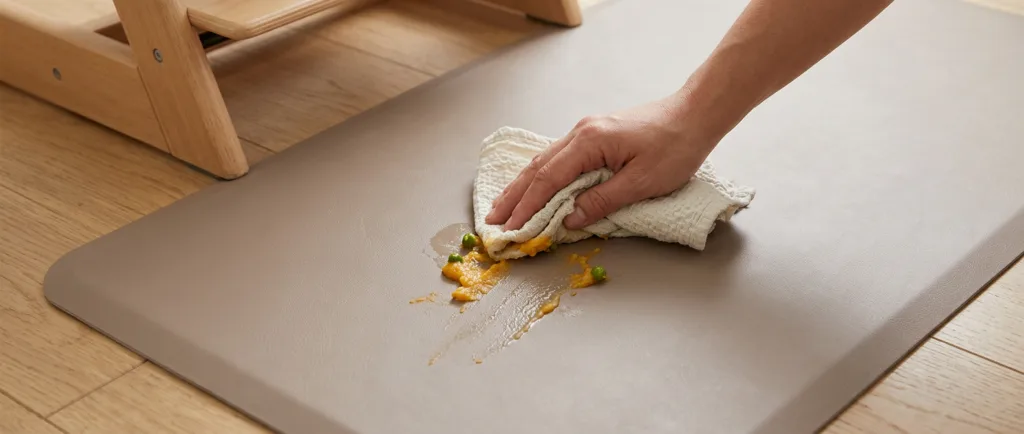
Without protection, that food lands on whatever floor you have. Hardwood seams trap purees, grout stains, rugs absorb milk and juice, and kitchen floors get mopped several times a day. A high chair floor mat is a simple fix: it is a removable, washable surface placed under and around the high chair to catch food and liquid so the floor beneath stays clean. It also makes the “drop zone” visible, which helps when you are picking up pieces that have rolled away.
We covered splat mats in detail in our splat mat for high chair buyer’s guide. This article takes a wider view and compares every common option, including doing nothing at all.
Under High Chair Mat Options Compared
Families typically choose from five approaches. Each works; the question is which trade-offs suit your floor, your routine and your room.
| Option | Cleaning | Slip resistance | Profile under chair legs | Looks | Main trade-off |
|---|---|---|---|---|---|
| Vegan leather splat mat | Wipe clean; liquids sit on the surface | Good on most hard floors when backing grips | Thin and flat | Neutral, rug-like or printed designs | Not machine washable; wipe instead |
| Silicone mat | Wipe or rinse; flexible | Very grippy | Thin, but heavier | Often solid colors | Heavier to lift and shake out; can attract dust and lint |
| Washable rug | Machine wash after spills | Needs a rug pad on hard floors | Can be thicker; edges may curl | Most decorative | Absorbs liquids; frequent laundry |
| Plastic sheet or vinyl tablecloth | Wipe or shake out | Often slides and creases | Very thin | Utilitarian | Creases and slips; can look temporary |
| Nothing (bare floor) | Sweep and mop the floor itself | Depends on floor | None | No change to room | More floor cleaning; staining risk on grout and wood seams |
Vegan leather splat mats
A vegan leather splat mat is a thin, flexible mat with a leather-look surface that sheds liquids so spills can be wiped away. It is a popular choice in modern kitchens because it combines easy cleanup with a look that does not shout “baby gear”. It lies flat, so chair legs sit firmly on it, and it can be moved to under a play table or a craft area once the high chair years end. Komat produces vegan leather splat mats using a biodegradable PVC vegan leather; see our leather splat mats range for the format.
Silicone mats
Silicone grips the floor well and is easy to rinse. The trade-offs are weight, a tendency to pick up dust and lint, and a limited color and pattern range. Large silicone mats can be awkward to carry to the sink or outdoors to shake off.
Washable rugs
Washable rugs are the most decorative choice and feel good underfoot. But rugs absorb liquids, so milk, juice and purees soak in rather than sitting on the surface. Expect frequent laundry, and on hard floors use a rug pad so the rug does not slide when the chair is pulled out.
Plastic sheets and the bare floor
A cheap plastic sheet or a vinyl tablecloth catches food, but it tends to slide, crease and look temporary. Going without a mat is a valid choice on easy-clean floors like sealed vinyl, though it means mopping the floor itself after most meals.
How Big Should a High Chair Mat Be?
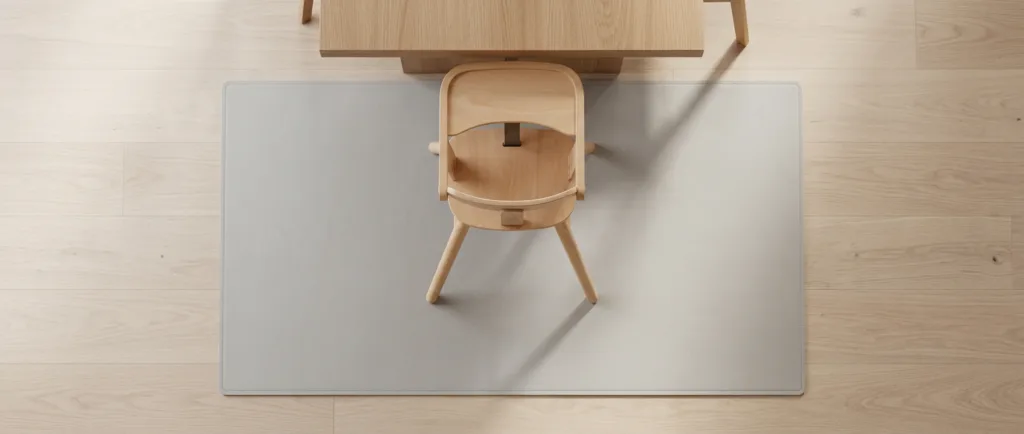
Most food does not land directly under the seat. It drops off the tray edges, gets thrown sideways and ends up in front of the chair where the child faces the table or the adult. That is why sizing to the chair’s footprint alone usually leaves the messiest areas uncovered. As a rule of thumb, measure the base of your high chair, then add a margin of roughly a foot or more on every side, with extra room on the side facing the table or where your child usually throws.
| Setup | Sizing approach | Notes |
|---|---|---|
| Freestanding high chair in a kitchen | Chair base plus generous margin on all sides | Keep the whole chair, including legs, on the mat so it sits level |
| High chair pulled up to a dining table | Extend the mat toward the table side | That is where most dropped food lands |
| Wide-base or wraparound-leg chair | Measure the outer leg span, then add margin | Wide bases need larger mats so legs do not sit on the edge |
| Booster seat on a dining chair | Mat under the dining chair and the floor in front | Consider a mat that also suits the dining area’s look |
| Small apartment kitchen | Largest mat that leaves a clear walkway | A mat that blocks a doorway or drawer will be moved and not used |
Slip Resistance and High Chair Stability
A mat under a high chair is part of the chair’s footing, so it should never make the chair less stable. The AAP’s HealthyChildren.org advises making sure a high chair cannot be tipped over easily, keeping it away from counters and tables a child could push against, always using the safety straps including the crotch strap, and never leaving a young child alone in a high chair. When its federal high chair standard took effect in 2019, CPSC reported an estimated 18,500 high chair-related injuries treated in US emergency departments over a recent two-year period, with most incidents involving falls when a child tried to climb into or out of the chair.
What that means for a mat:
- Thin and flat. A thick, squishy mat under chair legs can let the chair rock. Feeding-area mats should be thin and firm.
- All legs on the mat. Do not let one or two legs sit on the edge, where they can tilt or catch.
- Grippy backing. The mat should stay put when the chair is pulled out or an adult steps on it.
- Flat edges. Edges that curl create a trip point for adults carrying plates.
- A mat is not a safety device. Straps and supervision do the safety work; the mat handles the mess.
Our kitchen and mealtime applications page shows how splat mats fit into different kitchen layouts.
Cleaning Routine That Actually Works
The best high chair mat is the one that gets cleaned quickly after every meal. For wipe-clean surfaces like vegan leather and silicone:
- Pick up larger pieces first so they do not smear.
- Wipe the surface with a damp cloth and a little mild dish soap.
- For dried-on food, lay a warm damp cloth on the spot for a minute, then wipe.
- Lift the mat occasionally to clean the floor underneath and let both dry.
- Avoid harsh solvents and abrasive pads that can damage the surface.
Washable rugs need a different rhythm: blot liquids immediately, spot-clean daily and launder according to the label. Many families keep two rugs so one is always clean.
When Do You Need a High Chair Mat, and for How Long?
Most families start looking for a high chair mat around the time solids begin, which the AAP places at about 6 months. The first purees are usually spoon-fed and fairly contained. The real need arrives a little later, when finger foods and self-feeding take over and your baby discovers that food dropped over the side produces an interesting reaction from adults. From then until a child sits at the table on a booster seat, meals tend to involve some level of floor cleanup.
That period often runs well past the first birthday, and the mat does not have to retire when the high chair does. A thin wipe-clean mat moves easily under a toddler table for snacks, painting and play dough, under a booster seat at the dining table, or under a pet’s food and water bowls. For brands, that versatility is worth highlighting on the product page: it turns a single-stage purchase into something parents use for years in different rooms.
Style: Making the Mat Fit the Room
The high chair usually lives in the most visible part of the home, often the kitchen or dining area, for a year or more. A mat in a neutral tone or a rug-inspired print fits that space better than a bright plastic sheet. Look for colors that hide food stains between wipes (warm greys, taupes and patterned surfaces are more forgiving than white) and for a finish that does not look shiny or clinical. A mat that suits the room gets left down and used, which is the whole point.
Materials matter here too. A splat mat sits right where babies drop food and then pick it back up, so ask for the same children’s product testing you would expect for a play mat. Our non-toxic play mat guide explains what to ask for, and our broader guide to choosing a play mat covers matching mat types to different rooms.
Frequently Asked Questions
What is the best mat for under a high chair?
For most homes, a thin vegan leather or similar wipe-clean splat mat is the best balance. It lies flat so the chair stays stable, wipes clean in seconds and looks at home in a kitchen. Silicone is a good alternative if grip is the priority, and washable rugs suit families who prefer textile and do not mind laundry.
How big should an under high chair mat be?
Measure the base of the high chair, including the full leg span, and add a margin of roughly a foot or more on every side. Give extra coverage on the side facing the table, where most dropped food lands. Make sure all chair legs sit fully on the mat, not on its edge.
Can I use a foam play mat under a high chair?
It is not ideal. Thick, cushioned foam is designed for play and falls, and it can let chair legs sink or rock slightly. A feeding area is better served by a thin, firm, wipe-clean mat. Keep foam play mats in the play area and use a splat mat at mealtimes.
Are splat mats safe for babies?
A splat mat is a floor covering, not a safety device, so the main safety rules are about the high chair: use the straps, keep the chair stable and away from counters and tables, and never leave a young child alone in it. For the mat itself, ask about third-party testing for children’s product chemical limits.
How do I keep a high chair mat from sliding?
Choose a mat with a grippy backing and place it on a clean, dry floor. Make sure the whole chair sits on the mat so its weight helps hold it in place. Rugs on hard floors need a separate non-slip rug pad. Replace mats whose edges curl or whose backing has worn smooth.
For brands and retailers selling feeding gear, a well-designed splat mat is a natural companion to high chairs and tableware. Browse our private-label designs or contact Komat to discuss vegan leather splat mats sized and styled for your customers.