
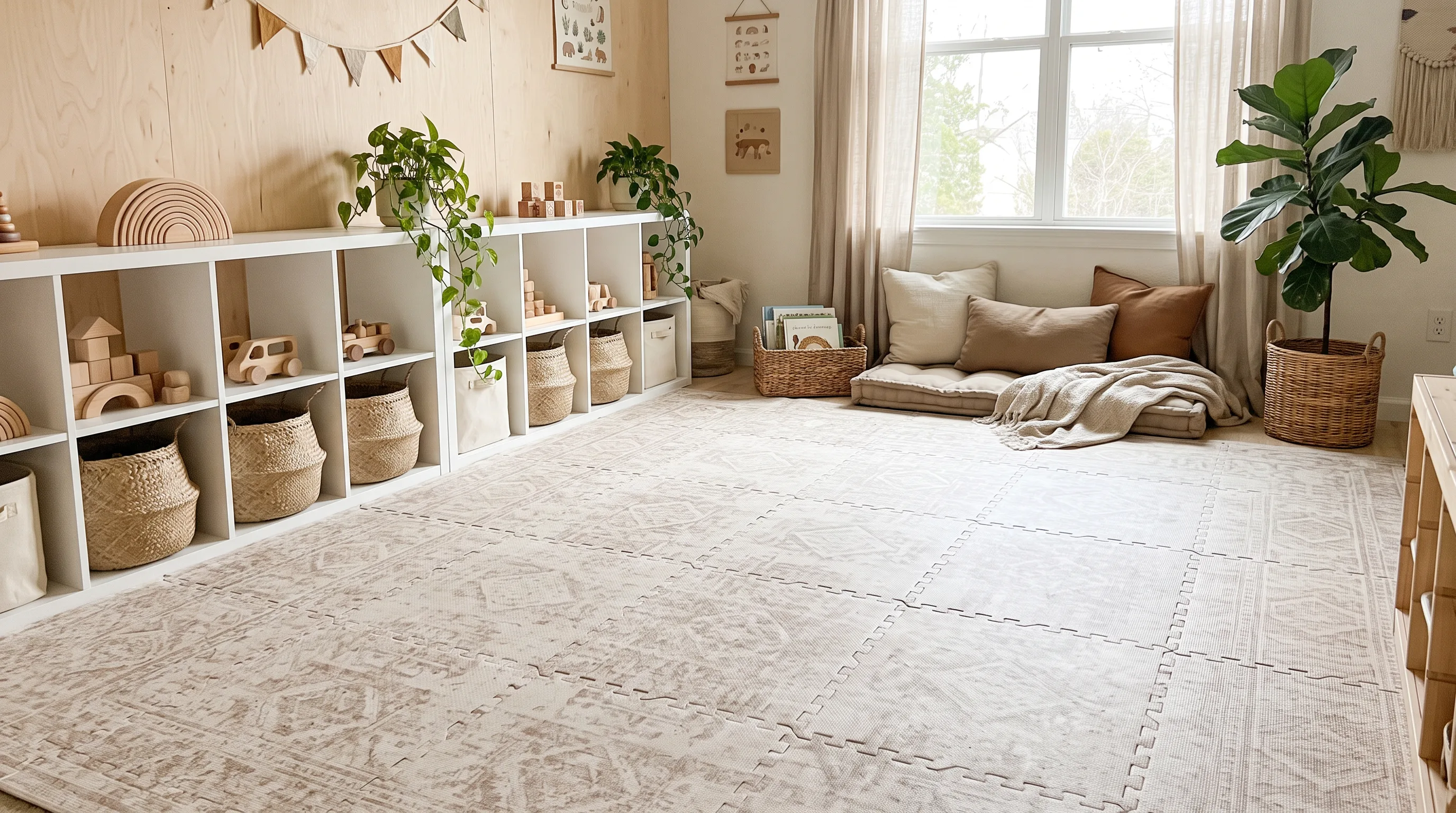
The best playroom ideas start with the floor: lay down a soft, wipeable surface first, then build zones for quiet reading, open storage and active play on top of it. A cushioned, rug-look foam floor makes the room safer for tumbles, warmer for sitting and easier to clean, and it sets the color palette for everything else you add.
Key Takeaways
- Plan a playroom by zones (soft floor, reading nook, storage, active play) rather than by furniture, so each activity has a clear home.
- The floor is the largest visible surface in most playrooms, so choosing it first makes color and layout decisions easier.
- Interlocking EVA foam tiles add cushioning and can be lifted, rearranged or extended as children grow.
- The U.S. Consumer Product Safety Commission advises anchoring bookcases, dressers and TVs to the wall and not storing tempting items where kids might climb.
- Small playrooms work best with low, open storage, one focal zone and a floor pattern that visually calms the space.
Why Should Playroom Design Start With the Floor?
Playroom design is the planning of a room, or part of a room, around how children actually play: on the floor, in short bursts, with lots of objects and frequent changes of activity. Babies crawl and roll, toddlers sit and stack, and preschoolers build, pretend and jump. Almost all of that happens at ground level, which is why the floor deserves the first decision and the biggest share of attention.
Starting with the floor also solves three practical problems at once. It defines the footprint of the play space, it sets the base color for walls, shelves and textiles, and it determines how much cleaning you will be doing. A hard floor with a thin decorative rug looks good in photos but is cold and unforgiving when a toddler sits down hard. Wall-to-wall carpet is soft but traps crumbs, paint and spilled milk. A modular foam floor sits between the two: cushioned, wipe-clean and easy to reshape.
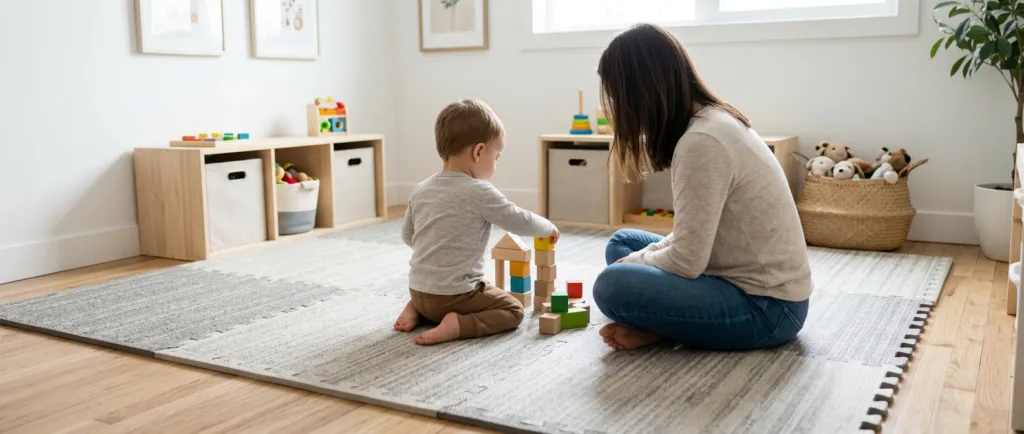
The American Academy of Pediatrics notes that simple, inexpensive objects such as blocks, containers and puzzles are some of the best ways to support a child’s creativity, and that a caregiver’s presence matters more than gadgets. Good playroom ideas follow the same logic: a comfortable floor where an adult can sit with a child will get used far more than an expensive themed room.
Playroom Ideas by Zone
A play zone is an area of the room set aside for one type of activity, marked out by flooring, furniture or lighting. Zones help children understand where things belong, which makes cleanup faster and play more focused. Most family playrooms need four of them, even if some overlap in a small space.
1. The Soft Floor Zone
This is the heart of the room: the open area where children build, roll toy cars, do puzzles and play pretend. Cover it with a cushioned surface large enough for a child and an adult to sit side by side. Interlocking EVA foam puzzle tiles are a common choice because you can size the area to the room, replace a single damaged tile and lift the whole floor when you move. If you want the room to look like a living space rather than a gym, choose rug-look printed tiles whose pattern continues across the seams. Our EVA foam puzzle mat buyer’s guide explains thickness, edge pieces and print options in more detail.
2. The Reading Nook
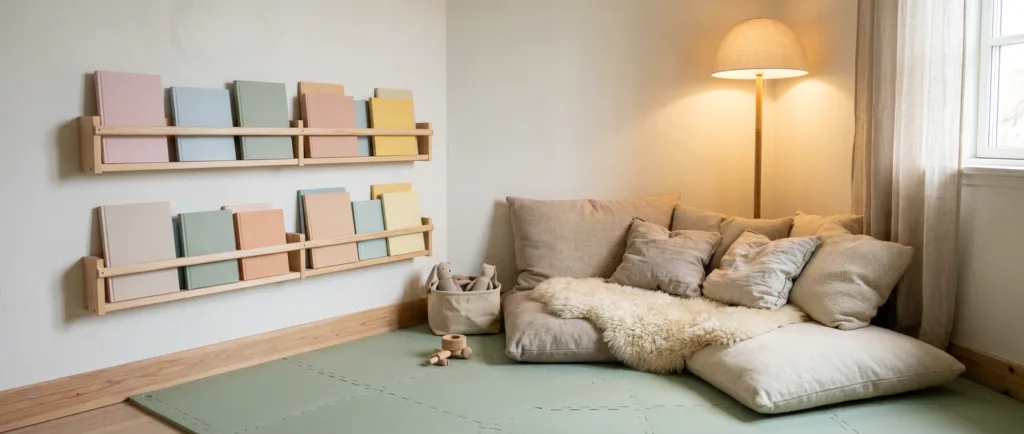
A reading nook is a small, enclosed corner with soft seating and books displayed at a child’s eye level. Face-out book ledges let pre-readers choose by cover, and floor cushions or a low chair make it a place children retreat to on their own. Put the nook on the soft floor or on a smaller section of mat, in a corner away from the busiest traffic path, and add a warm lamp for evening reading.
3. The Storage Wall
Storage is where many kids playroom ideas succeed or fail. Low, open shelves with baskets or bins let children see what they have and put it back without help. Rotate toys rather than displaying everything; fewer choices at once usually means longer, calmer play. Every tall or heavy piece of furniture in the room should be anchored to the wall.
4. The Active Play Zone
Children need to move: climb, crawl through tunnels, balance and tumble. A low set of foam shapes, a small slide or a tunnel can live here. Keep this zone on cushioning, away from windows and sharp furniture corners, and keep any climbing height low and supervised. Our soft play equipment guide covers foam climbers, tumbling animals and how they fit into home and daycare spaces.
| Zone | Main purpose | Flooring idea | Key furniture or items | Safety focus |
|---|---|---|---|---|
| Soft floor | Building, puzzles, pretend play | Rug-look interlocking foam tiles | A few toy baskets within reach | Remove small parts for under-3s |
| Reading nook | Quiet time, books, calming down | Foam tiles plus floor cushions | Face-out book ledges, low lamp | Secure lamp cords out of reach |
| Storage wall | Sorting and putting toys away | Same as soft floor, or hard floor edge | Low open shelves, bins, baskets | Anchor shelves to the wall |
| Active play | Climbing, crawling, tumbling | Continuous foam tiles, no gaps | Low foam shapes, tunnel | Keep away from windows and corners |
| Art or table area | Drawing, play dough, snacks | Wipe-clean surface | Child-height table and chairs | Washable supplies, quick cleanup |
Choosing a Color Palette That Starts From the Floor
Because the floor covers the largest area, its color carries the room. Bright primary floors can make a room feel busy once toys, books and art are added, which is why many families now pick a calm base and let the toys provide the color. A useful rule: neutral floor, one or two accent colors on walls or textiles, and color from toys and books on top.
Here are palette directions that work well with rug-look foam floors:
- Warm neutral: cream and oatmeal floor, natural wood shelves, terracotta or mustard accents. Hides everyday dust and pairs with most living rooms.
- Soft pastel: blush, sage or powder blue floor with white furniture. Feels light in small rooms and suits nurseries that grow into playrooms.
- Grey and stone: light grey patterned floor, white walls, one bold accent such as navy. Works well in modern homes with cooler light.
- Earthy: taupe and olive with rattan baskets and plants. Creates a calm, nature-inspired room.
Pattern matters as much as color. A large-scale medallion or distressed rug pattern hides crumbs and wear better than a solid color, and a pattern that lines up across tiles reads as one rug rather than a grid of squares. If you are styling a family room rather than a dedicated playroom, our living spaces application page shows how rug-look mats blend into shared rooms.
Small Playroom Ideas for Apartments and Shared Rooms
Not every family has a spare room. A small playroom can be a corner of the living room, the end of a hallway, a section of a bedroom or a converted dining nook. The goal is the same: a defined, comfortable and tidy play space that does not take over the house.
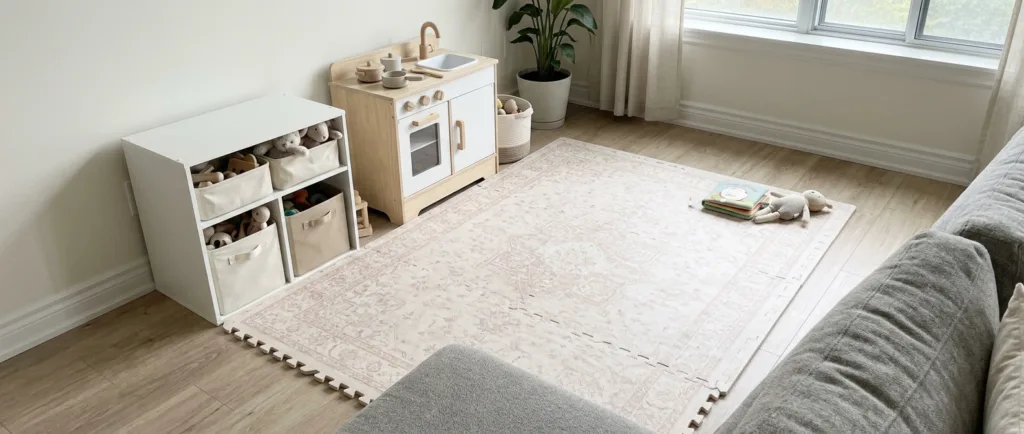
- Define the footprint with the floor. A rectangle of foam tiles instantly says “this is the play area,” and when the tiles are packed away, the room returns to adult use.
- Choose one focal zone. In a small space, combine the soft floor and active play zones, and tuck the reading nook into a corner of the same mat.
- Go vertical, but keep it anchored. Wall-mounted book ledges and pegboards save floor space. Anything freestanding and tall must be secured to the wall.
- Use closed storage near the adult zone. Bins with lids or a low cabinet near the sofa hide toys at the end of the day.
- Pick a pattern that blends with the room. A neutral rug-look print looks like décor rather than a temporary gym floor.
Toddler playroom ideas in small homes should also account for supervision. A play corner within sight of the kitchen or sofa is often more useful than a separate room down the hall, because a toddler will play longer when an adult is nearby. For a step-by-step setup with gates and a checklist, see our guide to setting up a safe toddler play area.
Playroom Safety Basics
Safety should be designed in from the start, not added later. The U.S. Consumer Product Safety Commission (CPSC) reports that an estimated 17,800 people per year were treated in emergency departments for TV, furniture and appliance tip-over injuries from 2020 to 2022, with children under 18 accounting for 44% of those injuries, and that 217 tip-over deaths were reported from 2013 through July 2023. CPSC advises families to anchor TVs and furniture such as bookcases and dressers to the wall, store heavier items on lower shelves and avoid placing toys and remotes where kids may be tempted to climb.
Other basics to build into any playroom layout:
- Window coverings: CPSC recommends cordless window coverings in rooms where children may be present and advises moving cribs, beds, furniture and toys away from windows and window covering cords.
- Toy size: The AAP advises making sure all toys and parts are larger than your child’s mouth, and watching for loose button batteries and high-powered magnets.
- Age-appropriate toys: If older siblings share the room, keep small-part toys on higher shelves or in a separate bin with a lid.
- Soft, continuous flooring: Fill the play zone edge to edge with tiles, use border pieces to finish edges and check that tiles stay locked together.
- Supervision: No floor or furniture replaces an adult who is present and paying attention.
A foam floor helps with everyday bumps and makes sitting and kneeling more comfortable, but it is not fall protection for climbing structures. Keep climbing heights low and the play supervised.
| Playroom floor option | Cushioning | Cleaning | Flexibility | Best fit |
|---|---|---|---|---|
| Hard floor only | None | Easy sweep and mop | N/A | Art corners, older kids |
| Area rug on hard floor | Low to moderate (depends on pad) | Vacuum; spills can soak in | Move as one piece | Reading nooks, shared living rooms |
| Wall-to-wall carpet | Moderate | Vacuum; stains are harder | Fixed | Bedrooms, quiet rooms |
| Interlocking EVA foam tiles | Good for sitting, crawling and everyday tumbles | Wipe with a damp cloth and mild soap | Add, remove or rearrange tiles | Main play zones, baby and toddler areas |
| Foam tiles over hard floor plus small rug in nook | Good | Mixed | High | Multi-zone playrooms |
How to Choose a Foam Floor for Your Playroom
Once you have decided on zones and a palette, the floor choice comes down to a few practical questions.
- Measure the zone, not the room. Leave a hard-floor border for furniture legs and door swings, and size the mat to the play area.
- Check thickness. A 1/2-inch EVA tile is a common standard for home play areas: soft enough for sitting and crawling, firm enough for toddlers to walk and balance on.
- Look at the surface. Printed, laminated surfaces give a rug-like look; ask how the print is bonded so it does not peel at the edges with daily use.
- Ask about materials and testing. Look for products tested to recognized children’s product standards and ask what the foam is made of and how it was tested.
- Plan for cleaning. Closed-cell foam can be wiped with a damp cloth and mild soap; avoid soaking seams.
At Komat, our rug-look printed EVA mats use a patented non-continuous print lamination designed so the surface film does not peel, a borderless puzzle design and patterns matched across tiles so the floor reads as one continuous rug. Our standard thickness is 1/2 inch, our EVA formulation keeps formamide under 2 ppm, and our mats are tested to ASTM F963, CPSIA, CA Prop 65, EN 71 and REACH requirements, with reports available on request. You can browse the range on our EVA puzzle play mats page.
Frequently Asked Questions
What is the first thing to plan in a playroom?
Plan the floor first. It defines the play footprint, sets the color base for walls and furniture and decides how comfortable and easy to clean the room will be. Once you know where the soft floor zone goes and how big it is, place storage along a wall, tuck a reading nook into a quiet corner and keep active play away from windows and sharp furniture edges.
How do you make a small playroom feel organized?
Use one defined play area, low open shelves with a limited number of toys and closed bins for overflow. Rotate toys every week or two instead of displaying everything. A neutral, patterned floor mat calms the space visually, and wall-mounted book ledges save floor area. Keep tall storage anchored and make cleanup easy enough that a toddler can help.
Are foam floor tiles good for a toddler playroom?
Interlocking foam tiles are a practical choice for toddler playrooms because they cushion sitting, kneeling and everyday tumbles, feel warmer than hard floors and wipe clean after spills. Choose tiles tested to children’s product safety standards, use edge pieces for a finished border and check that seams stay locked. They are not a substitute for supervision or for proper surfacing under climbing equipment.
What colors work best for a kids playroom?
Many designers recommend a calm, neutral or soft pastel base, since toys, books and art add plenty of color on their own. Warm neutrals with wood and rattan feel cozy, pastels brighten small rooms and greys suit modern homes. A patterned floor in the base color hides crumbs and wear better than a solid tone.
How do you keep a playroom safe as kids grow?
Review the room every few months. Anchor any new furniture, move small-part toys out of reach of younger siblings, replace worn or damaged items and adjust climbing equipment to the child’s age. Keep cords and window coverings out of reach, and update the layout as play changes from crawling to building, pretending and more active movement.
If you are a brand, importer or retailer building a playroom flooring line for parents like these, explore our ready rug-look patterns on the designs page. To discuss private-label or custom prints, contact the Komat team.