
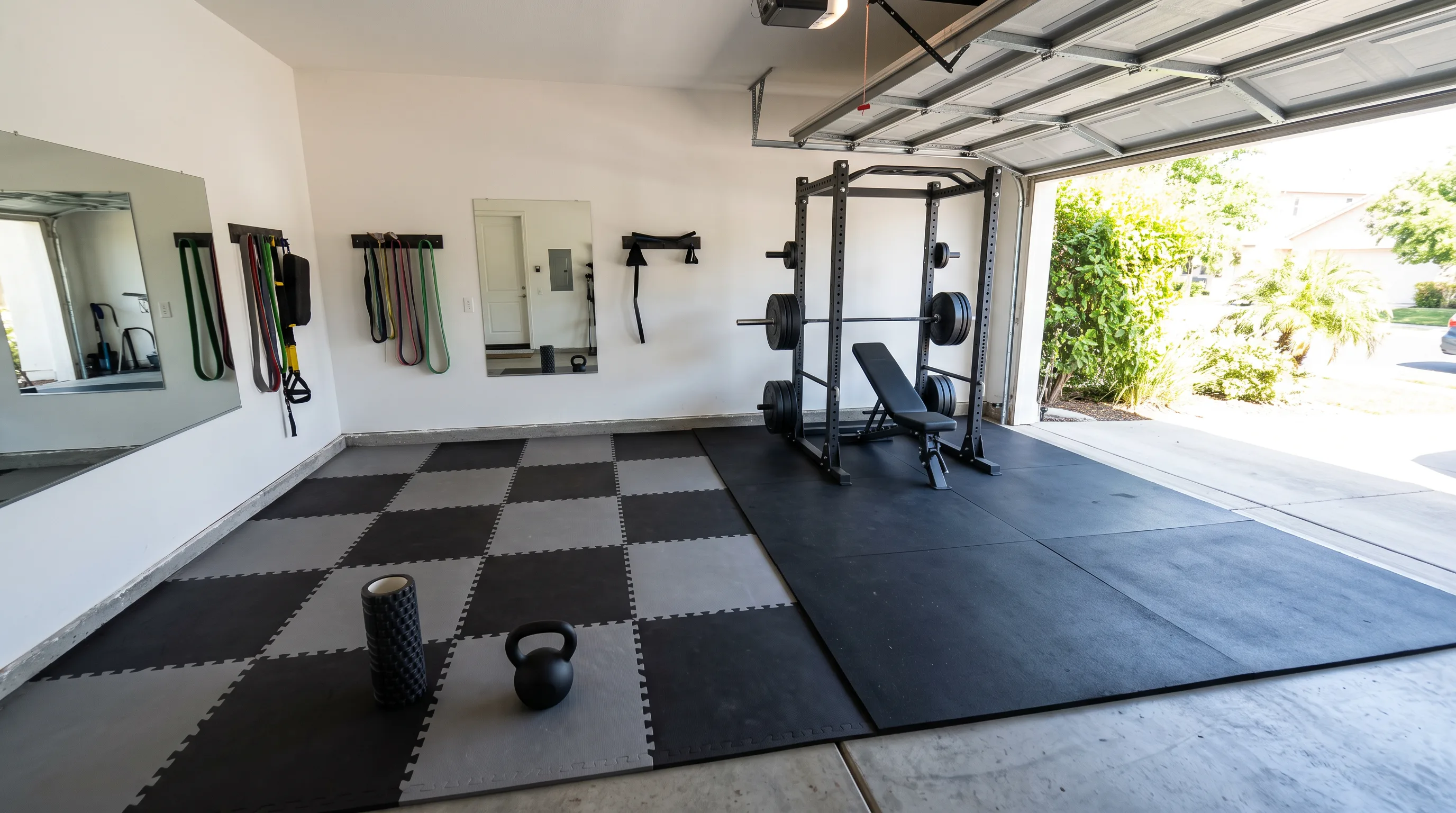
The right garage gym flooring depends on how you train. Interlocking EVA foam tiles are the comfortable, affordable choice for bodyweight work, stretching, mobility and light dumbbells, while dense rubber tiles or stall mats are the right choice wherever heavy barbells, kettlebells or plates will be dropped. Many garage gyms use both: rubber under the rack, foam everywhere else.
Key Takeaways
- Foam floor tiles cushion knees, hands and backs for floor work, but they are not designed to absorb repeated heavy barbell drops.
- Rubber tiles and stall mats are dense and durable enough for lifting platforms and heavy dropped weights.
- A zoned layout (rubber for lifting, foam for floor training) gives the best mix of protection, comfort and cost.
- Check concrete for moisture before covering it; ASTM F2170 is a standard method for measuring relative humidity inside concrete slabs.
- The CDC recommends adults do muscle-strengthening activity at least 2 days a week, so plan a floor that supports the training you will actually do.
Why Does Garage Gym Flooring Matter?
Garage gym flooring is any surface laid over a garage’s concrete slab to make it safer and more comfortable for exercise. Bare concrete is hard on joints during floor exercises, cold in winter, unforgiving when equipment is dropped and easily chipped by weights. The right floor protects the slab, protects your equipment, protects your body during floor work and makes the space feel like a gym rather than a parking spot.
There is no single best home gym flooring, because a garage gym can mean very different things. A family that uses the garage for stretching, core work, kids’ tumbling and light dumbbells has different needs from someone who deadlifts heavy several times a week. The honest answer to “foam tiles, rubber or both?” starts with how you train.
The Main Garage Gym Floor Options
EVA Foam Floor Tiles
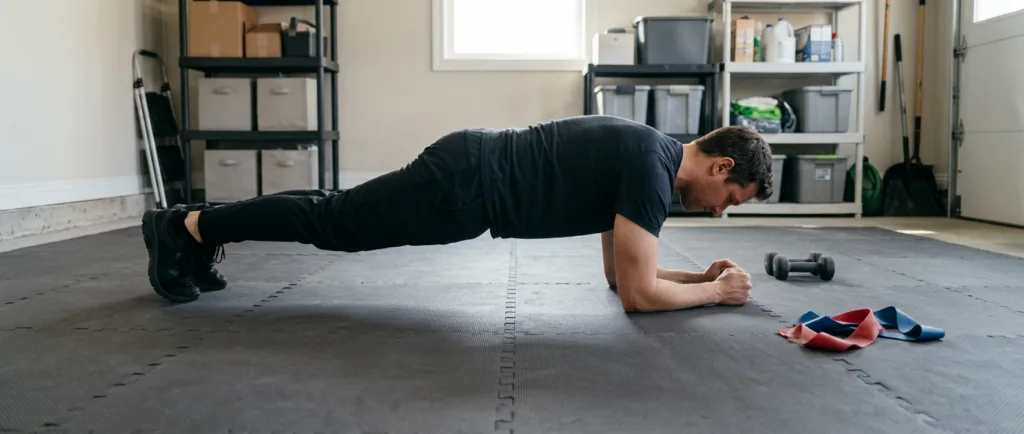
EVA foam tiles are interlocking squares of ethylene vinyl acetate, a lightweight closed-cell foam. Closed-cell means the foam’s cells are sealed, so the tile resists absorbing water and sweat. EVA tiles are soft under knees and hands, warm compared with concrete, quick to install with no tools and easy to cut around obstacles. They are the most comfortable option for planks, push-ups, stretching, mobility work, core training and kids’ play.
The trade-off is density. Foam compresses under load, so heavy, sharp or concentrated weight can dent it, and repeated heavy drops will damage it. Foam is also less stable underfoot than rubber for very heavy standing lifts. To understand why the material behaves this way, see our explainers on EVA material and closed-cell foam.
Rubber Tiles and Rolls
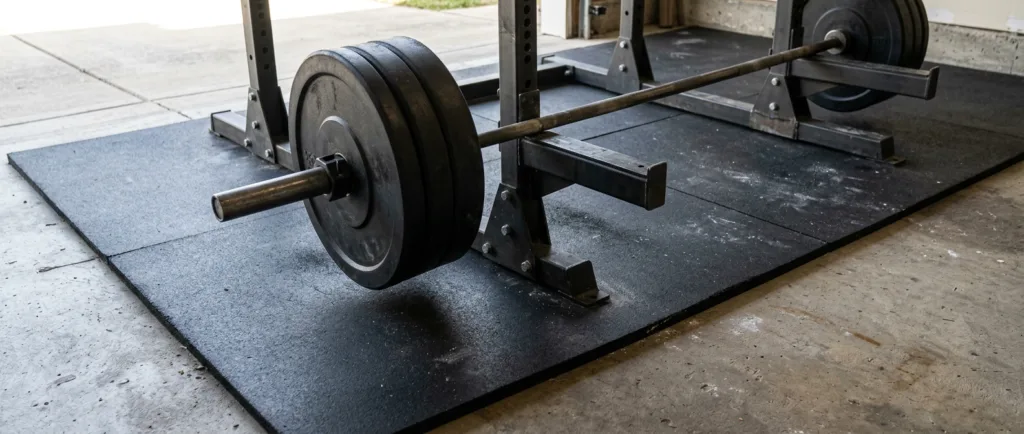
Rubber gym flooring, often made from rubber granules bonded together, is dense, durable and grippy. Rubber tiles interlock or butt together; rolls cover large areas with few seams. Rubber handles dropped dumbbells and kettlebells, protects concrete under racks and stays stable under heavy squats. Downsides: it is heavy, can have a strong odor when new, is firmer under knees and generally costs more per square foot than foam.
Horse Stall Mats
Horse stall mats are thick, heavy rubber mats sold through farm and feed stores, and they have become a popular budget option for garage lifting areas. They are tough enough for heavy lifting, but they are very heavy to move, often have a noticeable smell and may have uneven edges that need trimming. They are a practical choice for a lifting platform rather than a whole floor.
Artificial Turf
Gym turf is a strip of synthetic grass designed for sled pushes, drags and agility work. It is a specialty surface for one kind of training and is usually laid over rubber or as a lane alongside other flooring.
Garage Gym Flooring Compared
| Flooring type | Comfort for floor work | Handles heavy drops | Stability for heavy lifts | Install and weight | Best use |
|---|---|---|---|---|---|
| EVA foam tiles | Excellent | No; can dent or tear | Fair | Very light, tool-free interlocking | Bodyweight, stretching, mobility, light weights, kids’ play |
| Rubber tiles | Fair; firmer | Yes | Excellent | Heavy; interlocking or butt-joined | Lifting areas, under racks, dumbbell zones |
| Rubber rolls | Fair | Yes | Excellent | Heavy; few seams; harder to install alone | Full-floor coverage for serious lifters |
| Horse stall mats | Poor to fair | Yes | Excellent | Very heavy; may need trimming | Budget lifting platform |
| Artificial turf | Fair | No | Good | Moderate; usually laid over another floor | Sled pushes, drags, agility lanes |
| Bare or sealed concrete | Poor | No; chips and cracks | Excellent | None | Not recommended as a training surface |
Choose by Workout Type
The fastest way to choose is to list what you actually do in the garage, then match flooring to each activity.
| Workout type | Recommended surface | Why |
|---|---|---|
| Bodyweight training (push-ups, planks, lunges) | EVA foam tiles | Cushions hands, knees and elbows on concrete |
| Stretching and mobility | EVA foam tiles | Warm, soft surface for lying and kneeling |
| Core and floor work | EVA foam tiles | Comfortable for the back and hips |
| Light dumbbells, set down gently | EVA foam tiles or rubber | Foam is fine if weights are placed, not dropped |
| Kettlebell swings and dumbbell drops | Rubber tiles | Dense enough to absorb repeated impact |
| Barbell squats, bench and deadlifts | Rubber tiles, rolls or stall mats | Stable footing; protects slab from plates |
| Olympic lifts with dropped barbells | Rubber platform, ideally with bumper plates | Only dense rubber is suited to repeated drops |
| Sled and agility work | Turf lane | Designed for pushing and dragging |
| Kids’ tumbling and family play | EVA foam tiles | Soft, lightweight and easy to wipe |
We want to be direct about one point: if you drop heavy barbells, put rubber under them. Foam tiles, including ours, are designed for comfort and everyday floor training, not as an impact surface for heavy dropped loads. Using them that way will dent the tiles and will not protect your slab well.
Laying Gym Flooring Over Concrete: Check for Moisture First
Garage slabs are often on grade, unsealed and exposed to temperature swings, so moisture is a real consideration before you cover them. Moisture vapor rising through concrete can become trapped under flooring, leading to condensation, odor and mold or mildew on the underside of tiles.
ASTM F2170 is a standard test method for determining the relative humidity inside concrete floor slabs using in situ probes. According to ASTM, it is used to assess whether a slab is too moist for flooring to be installed, and excess moisture can cause problems including adhesive failures, bulging finishes and microbial growth. ASTM also notes that results reflect conditions only at the time and locations tested. For a home garage, a professional test may be overkill, but the principles still apply:
- Look for signs of moisture: dark patches, white efflorescence, or water collecting at the slab edge after rain.
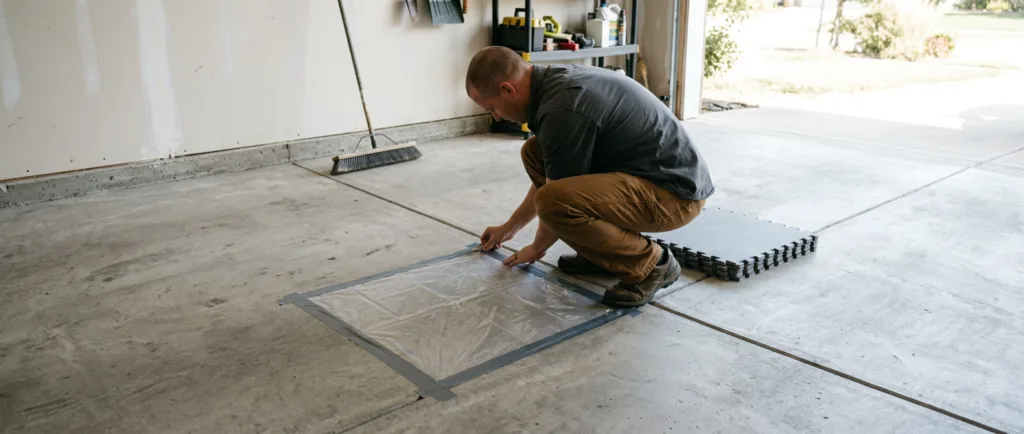
- Try a simple check: tape a square of clear plastic sheet flat to the slab and leave it for a day or two. Condensation underneath or a darkened slab suggests moisture coming up through the concrete. This is an informal indicator only, not a substitute for a standardized test.
- Control humidity: the U.S. EPA advises keeping indoor humidity below 60%, ideally between 30% and 50%, and says the key to mold control is moisture control. A dehumidifier helps in enclosed garages.
- Dry spills quickly: EPA advises drying water-damaged areas and items within 24 to 48 hours to prevent mold growth.
- Lift tiles periodically: interlocking tiles make it easy to check the slab and let it dry.
If your slab has persistent moisture issues, talk to a flooring professional before installing anything, especially glued-down products. Requirements vary by product, so follow each manufacturer’s installation instructions.
Garage Gym Ideas: A Zoned Layout
Most home lifters end up with a hybrid floor. Here is a layout that works in a typical one- or two-car garage:
- Lifting zone: rubber tiles or stall mats under and in front of the rack, extending far enough that you never step off the rubber mid-lift.
- Dumbbell zone: rubber tiles in front of the dumbbell rack, where weights are most often set down hard.
- Floor training zone: EVA foam tiles for stretching, core, bodyweight work, foam rolling and cool-downs.
- Conditioning lane: optional turf strip along one wall for sleds and agility drills.
- Transitions: use edge pieces or ramps so zones meet without trip edges.
This approach puts the expensive, heavy rubber only where it is needed and gives you a comfortable, warm and quiet floor everywhere else. It also keeps the space flexible: when the car needs to come back in, foam tiles can be lifted and stacked in minutes.
Plan the floor around consistency, too. The CDC recommends that adults get at least 150 minutes of moderate-intensity physical activity each week plus at least 2 days of muscle-strengthening activity that works all major muscle groups. A comfortable floor zone for warm-ups, mobility and bodyweight sessions makes those regular sessions easier to stick with.
Choosing Foam Tiles for the Floor Training Zone
If you are adding foam to your garage gym ideas list, look for:
- Thickness that balances comfort and stability: thicker foam feels softer but can feel less stable during standing exercises.
- Tight interlocks and border pieces so tiles stay together and edges do not catch toes.
- A textured or non-slip surface for grip when sweating.
- Closed-cell construction so sweat and spills wipe off instead of soaking in.
- Colors that hide chalk and dust, such as charcoal, grey or patterned finishes.
Komat produces EVA foam floor tiles for home fitness brands and importers, alongside our play mat lines. Our standard thickness is 1/2 inch, our production line runs 100% in-process inspection at every station, and capacity runs 25 to 30 containers per month. You can see how foam tiles fit into training spaces on our home fitness page, and read about material options such as standard EVA and Bio EVA on our materials and functions page.
Frequently Asked Questions
Is foam flooring good for a garage gym?
Foam floor tiles are good for the floor training part of a garage gym: bodyweight exercise, stretching, mobility, core work and light dumbbells that are set down rather than dropped. They are comfortable, warm and easy to install. They are not designed for heavy barbell or kettlebell drops, so use rubber flooring under racks and lifting areas.
What is the best garage gym flooring for heavy lifting?
Dense rubber is the standard choice for heavy lifting: rubber tiles, rubber rolls or thick horse stall mats. Rubber provides stable footing for squats and deadlifts and absorbs impact from dropped weights better than foam. If you drop barbells from overhead, build a dedicated rubber platform and use bumper plates.
Can you put gym flooring directly on concrete?
Yes, interlocking foam and rubber tiles are usually laid directly on a clean, level, dry concrete slab. Check for moisture first, since vapor trapped under flooring can cause condensation and mildew. Keep humidity in check with ventilation or a dehumidifier, and lift tiles periodically to let the slab breathe. Follow the flooring manufacturer’s instructions.
Should I use foam and rubber together?
For most home gyms, yes. Put rubber where weights are lifted and dropped, and foam where you stretch, do bodyweight work and cool down. This zoned approach costs less than covering the whole garage in rubber, keeps floor training comfortable and protects the slab where it matters most.
How do I keep garage gym flooring clean?
Sweep or vacuum regularly to remove grit that can wear the surface. Wipe foam tiles with a damp cloth and mild soap, and mop rubber with a cleaner suited to rubber. Dry spills quickly, keep humidity under control and lift tiles occasionally to check for moisture underneath.
If you are a fitness brand, importer or distributor building a foam floor tile line for home gyms, learn how we work with partners on our importers and distributors page, or contact Komat to discuss specifications.