
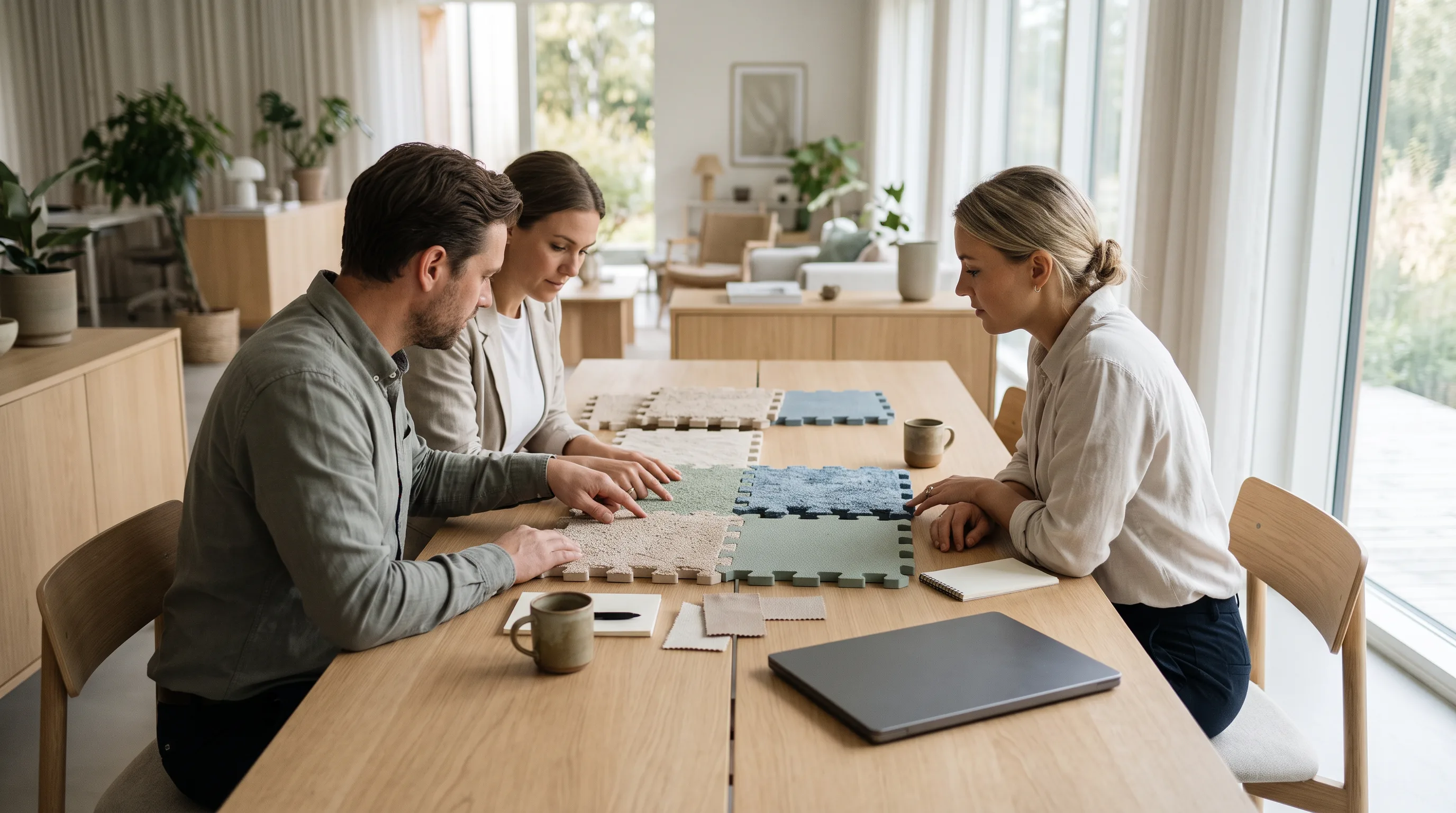
OEM vs ODM comes down to who owns and develops the product design. With OEM (original equipment manufacturing), you bring the design and specification and the manufacturer builds it to your spec. With ODM (original design manufacturing), the manufacturer supplies a ready, proven design that you adapt and sell under your brand. For play mat brands, ODM is faster to launch; OEM gives more control and exclusivity.
Key Takeaways
- OEM means the buyer supplies the design, artwork and specification, and the manufacturer produces to that spec.
- ODM means the manufacturer owns an existing design that the buyer selects, customizes lightly and sells under its own brand.
- The biggest practical differences are design ownership, development effort, speed to market and how exclusive the finished product is.
- Under US consumer product law, the importer of a product counts as its manufacturer, so compliance duties stay with the brand under either model.
- Many play mat brands launch with ODM designs, then move bestsellers or signature collections to OEM once they know what sells.
What Does OEM Mean in Manufacturing?
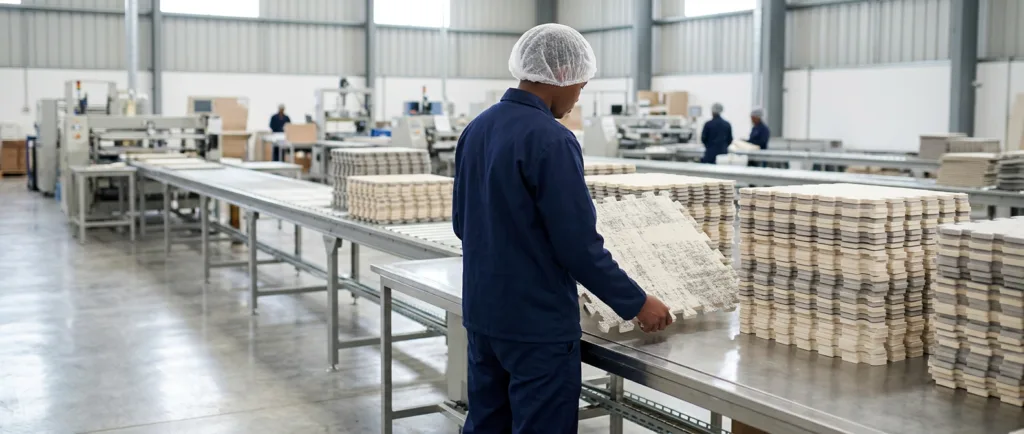
OEM stands for original equipment manufacturer. In consumer goods sourcing, an OEM arrangement is one where the brand owner provides the product design, artwork, dimensions, material specification and packaging requirements, and the manufacturer turns that package into finished goods. The manufacturer contributes process know-how, tooling, production and quality control, but the creative and technical definition of the product comes from the buyer.
One honest caveat about the term: “OEM” is used in two opposite ways. In the auto and electronics world, the OEM is often the brand that sells the finished product (the car maker, for example), while suppliers make parts for it. In contract manufacturing and private-label sourcing, which is how most importers use the word, “OEM production” means the manufacturer builds to the buyer’s design. When you talk to suppliers, confirm which meaning they are using. A one-line definition in your quotation request avoids weeks of confusion.
What Does ODM Mean?
ODM stands for original design manufacturer. ODM manufacturing is a model where the manufacturer has already designed, engineered and validated a product, and buyers license or purchase that design to sell under their own brand. The buyer typically chooses from a catalog, then customizes colorways, packaging, inserts and logo placement, without paying for ground-up development.
For an EVA foam play mat, ODM might mean picking one of a manufacturer’s existing rug-look patterns, choosing a tile size and thickness the line already produces, and adding your own retail box and insert card. The core product (pattern artwork, tile geometry, lamination method) already exists and has already been through production, which is why ODM programs move faster.
OEM vs ODM: A Side-by-Side Comparison
The table below compares the two models on the factors that usually decide the choice for a play mat or baby product brand. Treat it as a starting framework; individual contracts can shift any of these points.
| Factor | OEM (your design) | ODM (manufacturer’s design) |
|---|---|---|
| Who creates the design | Your team or your designer | The manufacturer’s design and R&D team |
| Design and artwork ownership | Usually yours, if the contract says so | Usually stays with the manufacturer; you get the right to sell it |
| Development effort | High: specs, artwork files, color approval, pre-production approval | Low to moderate: select, customize, approve packaging |
| Tooling and setup | May need new cutting dies or print setups | Usually uses existing dies and print setups |
| Speed to market | Slower, because development and approvals come first | Faster, because the product is already proven in production |
| Exclusivity | High; the design is unique to you | Limited; other brands may sell the same base design unless exclusivity is negotiated |
| Differentiation | Strong: pattern, colors, size and material are yours | Moderate: comes from packaging, branding, bundles and channel |
| Risk | Higher upfront risk if the design does not sell | Lower development risk; the design has a production track record |
Who Owns the Design? Intellectual Property in OEM and ODM
Ownership is where OEM and ODM deals most often go wrong, usually because nobody wrote it down. It helps to separate three kinds of rights. The USPTO describes a trademark as “a word, phrase, design, or a combination that identifies your goods or services,” a patent as covering technical inventions, and copyright as covering original creative works such as artwork. On a play mat, your brand name and logo are trademark territory, a printed pattern is typically copyright territory, and a construction method (for example, a lamination process) can be patent territory.
In an OEM deal, the brand normally expects to own the artwork it commissioned and the right to have it produced elsewhere. Put that in the supply agreement, along with who owns any print files, color standards and cutting dies the manufacturer creates for you. In an ODM deal, the manufacturer typically keeps ownership of the base design and any production patents, and grants you the right to sell finished goods under your trademark. If you need exclusivity on a pattern, for a territory or a channel, negotiate it explicitly and define its scope and duration.
Two more points matter for importers. First, the US government’s StopFakes program notes that patents and trademarks are territorial and that a US patent or trademark does not protect you in another country, so register your brand where you sell and, if relevant, where you manufacture. Second, ODM products may include the manufacturer’s own patented features. At Komat, for example, our ODM and OEM programs can use our patented non-continuous print lamination (designed so the printed film does not peel) and our borderless puzzle design patent; see Komat’s R&D and patents for how those are applied. Using a manufacturer’s patented feature does not transfer the patent to you, so clarify what you can and cannot claim in marketing.
How OEM and ODM Work for EVA Foam Play Mats
Play mats are a good illustration of the trade-off because the product looks simple but involves several engineering choices: foam formulation, density, thickness, tile geometry, print method and edge finishing. Here is how each model plays out in practice.
The ODM route: start from ready private-label designs
With an ODM program, you start from designs that already exist and have run on the line. Komat keeps 50+ ready private-label designs, including rug-look printed EVA puzzle play mats with patterns matched across tiles so the floor reads as one continuous rug. A typical ODM project looks like this: you shortlist patterns from the design library, confirm tile size and our standard 1/2-inch thickness, choose the material (standard EVA or Bio EVA with 20 to 30 percent bio-based content), then brief packaging, logo placement and insert copy. The tooling, print setups and inspection criteria already exist, so the main work is packaging approval and compliance documentation.
The trade-off is that a ready design is not unique by default. If differentiation matters, ask about colorway changes, exclusive designs for your channel, or bundling (for example, pairing a puzzle mat with a vegan leather splat mat for under the high chair).
The OEM route: your artwork, your specification
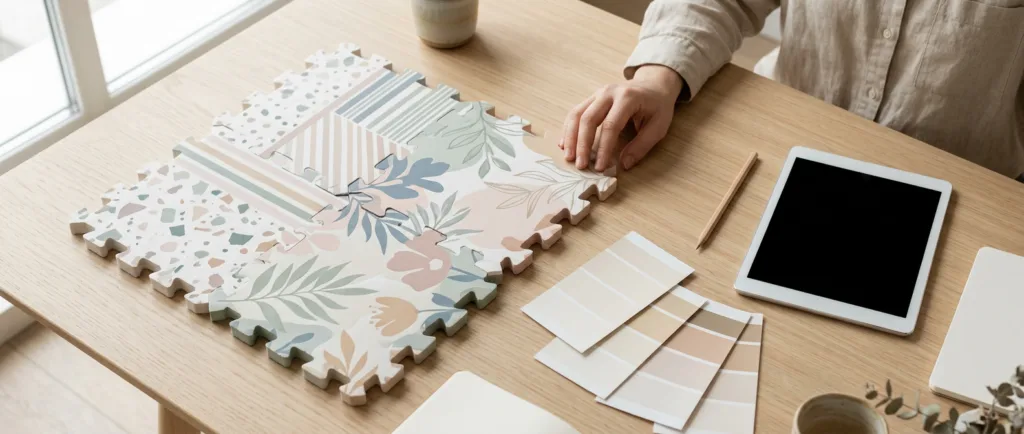
With OEM production, you define the product. For a play mat, that usually means supplying pattern artwork (layered files at full scale, with the repeat planned so it lines up across tile joints), color standards, tile dimensions and edge style, thickness, material choice and packaging dielines. The manufacturer then advises on what the process can achieve: how fine a line will print cleanly on foam, how a pattern should be split across interlocking edges, and what tolerances are realistic for thickness and fit.
OEM is where material choices become a real differentiator. A brand might specify Bio EVA for a sustainability-led line, GraphEVA (a graphene EVA material) for a premium collection, or a borderless puzzle layout for a cleaner look. Expect more rounds of review before mass production: artwork proofing, color approval, a pre-production approval unit, and agreement on inspection criteria. Our OEM/ODM process page walks through those stages step by step.
Does OEM or ODM Change Your Compliance Responsibilities?
No. This is the point new brands most often misunderstand. Under the Consumer Product Safety Act, a “manufacturer” is defined as “any person who manufactures or imports a consumer product,” and a “children’s product” is one designed or intended primarily for children 12 years of age or younger. If you import play mats for babies and toddlers, you carry the certification duty whether the design came from you or from the manufacturer.
In practice, US importers of children’s products must issue a Children’s Product Certificate based on testing by a CPSC-accepted third-party laboratory. CPSC also notes that, as of July 8, 2026, importers must electronically file certificate data with US Customs and Border Protection. A good manufacturer makes this easier: Komat’s products are tested to ASTM F963, CPSIA, CA Prop 65, EN 71 and REACH requirements, with reports available on request, and our EVA formulation keeps formamide under 2 ppm. But the certificate is still yours to issue. Our guide to the Children’s Product Certificate explains what goes into one, and you should confirm specifics with your testing lab or counsel.
Which Model Fits Your Play Mat Brand?
There is no universally better model. The right choice depends on your stage, budget for development, and how you plan to compete. Use this table as a quick decision guide.
| Your situation | Better fit | Why |
|---|---|---|
| First launch, testing a new channel | ODM | Proven designs and existing setups reduce development risk and time |
| You have an in-house designer and a clear brand aesthetic | OEM | Your artwork becomes the differentiator competitors cannot copy easily |
| Distributor or importer filling a range quickly | ODM | A catalog of ready designs fills assortment gaps fast |
| Premium line built on a material story (Bio EVA, GraphEVA) | OEM or customized ODM | Material and design choices can be specified together |
| Retail program that requires exclusive patterns | OEM, or ODM with negotiated exclusivity | Exclusivity has to be designed or contracted, not assumed |
| Limited time to manage approvals | ODM | Fewer artwork, color and pre-production approval rounds |
A hybrid path many brands take
Many brands we work with blend the two. They launch with a handful of ODM designs to learn which colorways, sizes and positioning sell, then commission OEM artwork for a signature collection once they have sales data. Others keep ODM for core neutral patterns and use OEM for seasonal or licensed designs. A hybrid approach spreads development cost over proven demand rather than betting everything on untested artwork. The comparison between private label and white label covers a related decision: how exclusive your branded version of a ready design really is.
Questions to Ask Before You Commit
Whether you lean OEM or ODM, these questions surface most problems early:
- Who owns the artwork, print files, color standards and cutting dies, and can I move production if needed?
- For ODM designs, is the pattern sold to other brands, and can exclusivity be agreed by channel or region?
- Which manufacturer patents are built into the product, and what may I say about them in marketing?
- Which standards has the product been tested to, and can I see current reports from an accredited lab?
- What in-process inspection happens at each station, and what happens if defective units arrive?
- How are artwork proofs, color approvals and the pre-production approval unit handled, and who signs off?
A manufacturer that answers these clearly and in writing is usually one that will handle the rest of the program well. On our side, that includes 100 percent in-process inspection at every station, a 99.7 percent or higher shipping yield, and 1:1 replacement for defective units found on delivery.
Frequently Asked Questions
What is the main difference between OEM and ODM?
The main difference is design ownership and development effort. In OEM, the buyer supplies the design and specification and the manufacturer produces it. In ODM, the manufacturer supplies an existing design that the buyer brands and sells. OEM offers more control and exclusivity; ODM offers faster launch and lower development risk because the product has already been proven in production.
Is ODM the same as private label?
Not exactly. ODM describes where the design comes from (the manufacturer). Private label describes how the product is sold (under the buyer’s brand). Most ODM products are sold as private label, but a private-label product can also be OEM if the brand created the design. The two terms overlap, which is why it is worth defining both in your supply agreement.
Do I own the design if I use an ODM manufacturer?
Usually not. In a typical ODM arrangement, the manufacturer keeps ownership of the base design and grants you the right to sell finished goods under your brand. If you customize artwork or commission a new pattern, ownership of those changes should be spelled out in writing. Exclusivity on a ready design is possible but has to be negotiated, not assumed.
Which is better for a first play mat launch, OEM or ODM?
For most first launches, ODM is the lower-risk option. You choose from designs that have already run in production, focus your effort on packaging, branding and channel, and learn what sells. Once you have sales data, you can move your best-performing styles or a signature collection to OEM artwork for stronger differentiation.
Who is responsible for CPSIA compliance under OEM or ODM?
The importer. US law treats the importer as the manufacturer of a consumer product, so a brand importing children’s play mats must issue a Children’s Product Certificate based on third-party testing, regardless of whose design it is. A capable manufacturer supports this with test reports and documentation, but the legal duty stays with the importer. Confirm details with your lab or counsel.
Weighing OEM against ODM for your next play mat line? Browse Komat’s ready private-label designs to see what an ODM start could look like, or contact our team to discuss custom OEM artwork and materials. Brand owners can also read how we support brand owner programs.